
Matera, Italy: Why This Ancient Cave City Belongs on Every Luxury Travel List
The Matera Italy cave city is one of those rare destinations that stops you in your tracks the moment you lay eyes on it. I still remember hearing about the first time a client stood at the edge of the ravine and looked out over the Sassi di Matera. Thousands of golden-stone cave dwellings stacked on top of one another, climbing the hillsides like something out of an ancient dream. There was no photograph, no travel article, no conversation with a well-traveled friend that could have prepared her for what she saw. That moment is exactly why I keep sending my clients here.
Matera is not a checkbox on an Italy itinerary. It is an experience that changes the way you think about time, history, and what it means to truly travel.
Matera, Italy: Why This Ancient Cave City Belongs on Every Luxury Travel List
What Makes Matera, Italy a Cave City Unlike Anything Else in the World
Matera is in the Basilicata region of southern Italy. It is tucked away from the more heavily trafficked tourist corridors of Rome, Florence, and the Amalfi Coast. That relative obscurity is part of what makes it so extraordinary. When you arrive, you feel as though you have discovered something the rest of the world has not quite caught up to yet.
The city is built into and around a dramatic limestone ravine called the Gravina. The ancient neighborhoods that cascade down into that ravine are known as the Sassi. That’s an Italian word that simply means “stones.” Those two districts, Sasso Caveoso and Sasso Barisano, are a labyrinth of cave dwellings, rupestrian churches, narrow stairways, and hidden courtyards carved directly from the rock. In 1993, UNESCO recognized the Sassi di Matera as a World Heritage Site.
For centuries, life here was defined by survival. Families lived in the caves alongside their animals without running water or electricity. By the 1950s, poverty and disease had become so severe that the Italian government forcibly relocated the cave dwellers to modern housing. Matera became known, with some shame, as “la vergogna d’Italia,” the shame of Italy.
But what happened next is one of the most remarkable urban redemption stories in European history. The caves were gradually restored. Artists, architects, and visionaries moved in. In 2019, Matera was named a European Capital of Culture. The same city that once symbolized poverty now stands as a symbol of resilience, creativity, and breathtaking beauty.
That story is part of what makes visiting the Matera Italy cave city so emotionally rich. You are not just seeing old buildings. You are walking through a living narrative of what it means to endure, to transform, and to thrive.
More European destinations many travelers always miss.
The Sassi di Matera: Where the Story Begins
Seeing the Sassi from Above
Before you descend into the Sassi, I want you to stop. Stand at the edge and simply look.
The best vantage points are found at Piazza Vittorio Veneto and Piazzetta Pascoli. Both of which offer sweeping views across the Matera cave dwellings and into the ravine below. If you have the time, and I strongly encourage you to make the time, cross the Gravina canyon to the Belvedere di Murgia Timone in the Murgia Materana Park.
The view from that opposite ridge is unlike anything you will find inside the city itself. You see the full sweep of the Sassi, the cathedral rising above it all, the gorge dropping away beneath, and beyond it, the quiet emptiness of the Basilicata countryside. It is the kind of view that makes you feel very small and very grateful at the same time.
One of my clients, a CEO from the Philadelphia area who had seen most of Europe, told me afterward that standing at that overlook was the single most visually stunning moment of her entire travel life. She had been skeptical when I suggested Matera, having never heard of it. She called me from the ridge, barely able to get the words out.
Wandering the Sassi on Foot
Once you are ready to descend, let yourself get a little lost. That is not a suggestion to be careless. It is an instruction to be present.
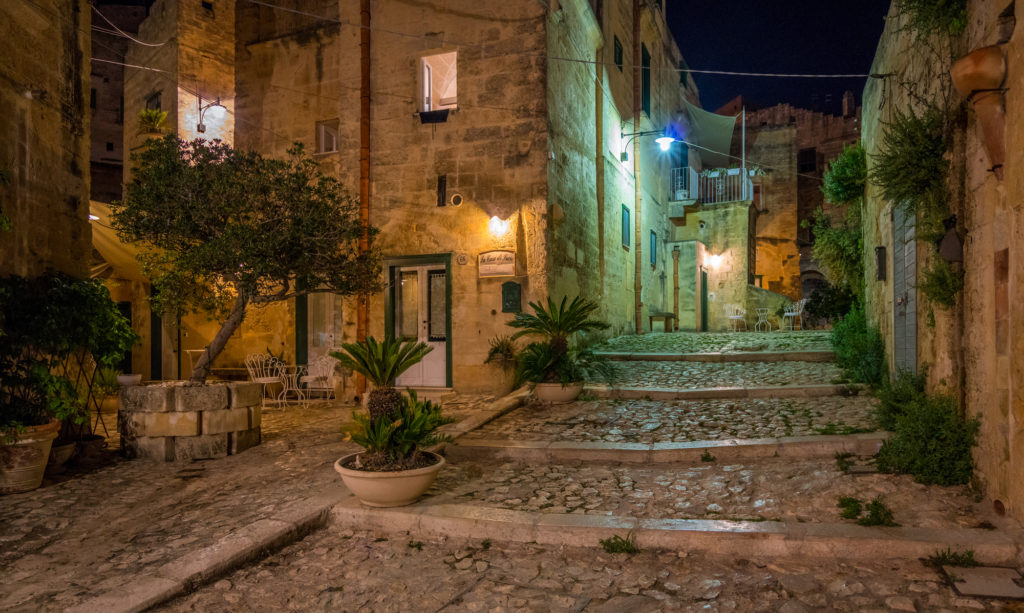
The Sassi di Matera are best experienced slowly, on foot, without a rigid agenda. Follow a staircase without knowing where it leads. Duck through an archway. Pause in a small piazza and listen to the quiet.
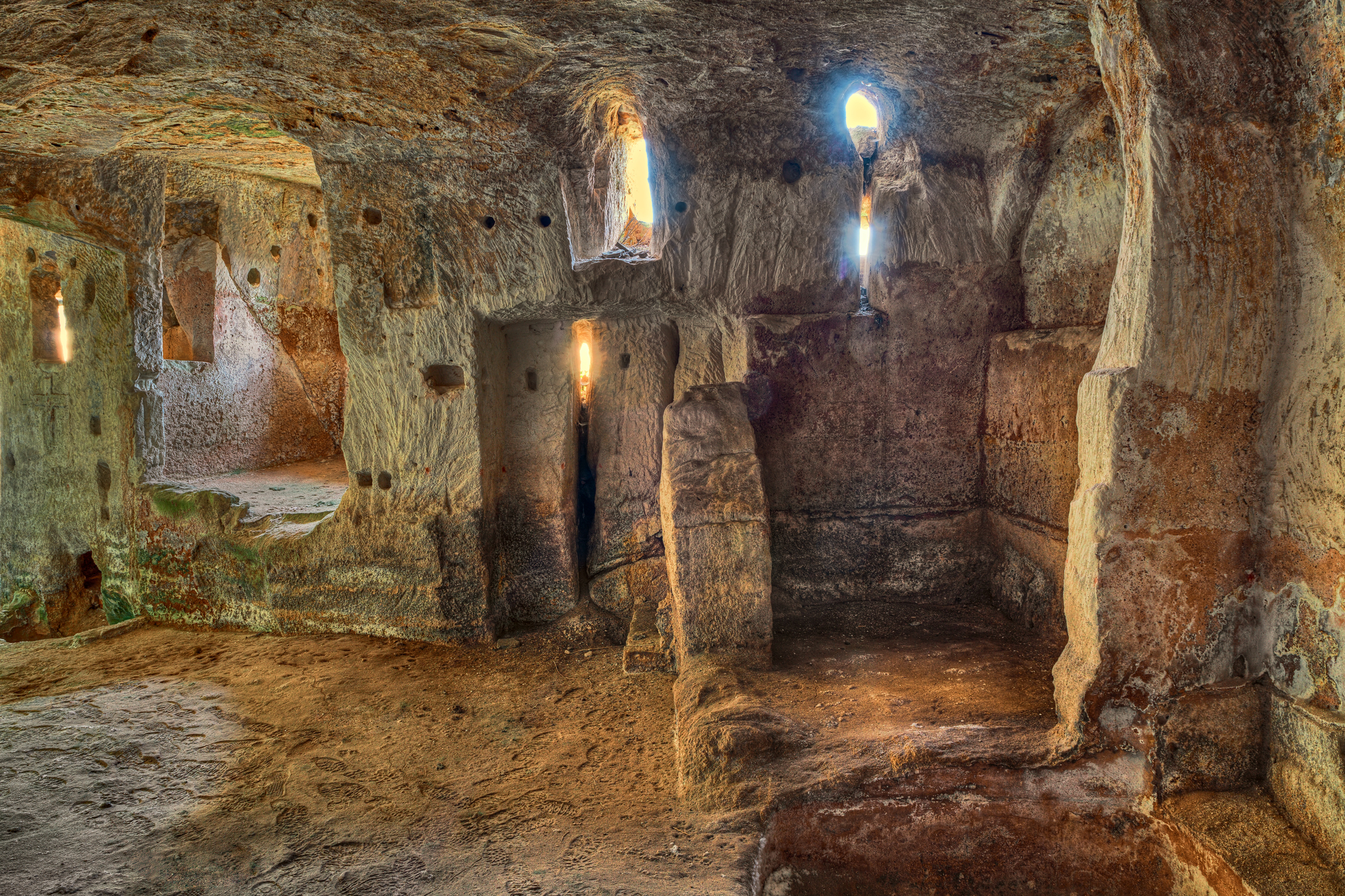
The Sassi have more than 150 rupestrian churches. They are cave sanctuaries carved directly into the rock and decorated with frescoes that in some cases date back to the 8th and 9th centuries. You will pass by many of them without even realizing it at first. That surprise is one of the great pleasures of walking Matera.
The Church of Santa Maria di Idris, perched dramatically on a rocky outcropping, is among the most visually striking of the rupestrian churches. It is worth seeking out specifically. Inside, the frescoes are remarkably well preserved. And the atmosphere is unlike anything you will encounter in a conventional church.
Sasso Caveoso, the southern district, tends to be quieter and less developed than its northern counterpart, Sasso Barisano. If you want to feel what Matera might have been like before restoration brought boutiques and aperitivo bars into the caves, spend your early morning hours in Sasso Caveoso.
What to See in Matera, Italy: A Guide to the Cave City’s Most Remarkable Experiences
The Matera Cathedral
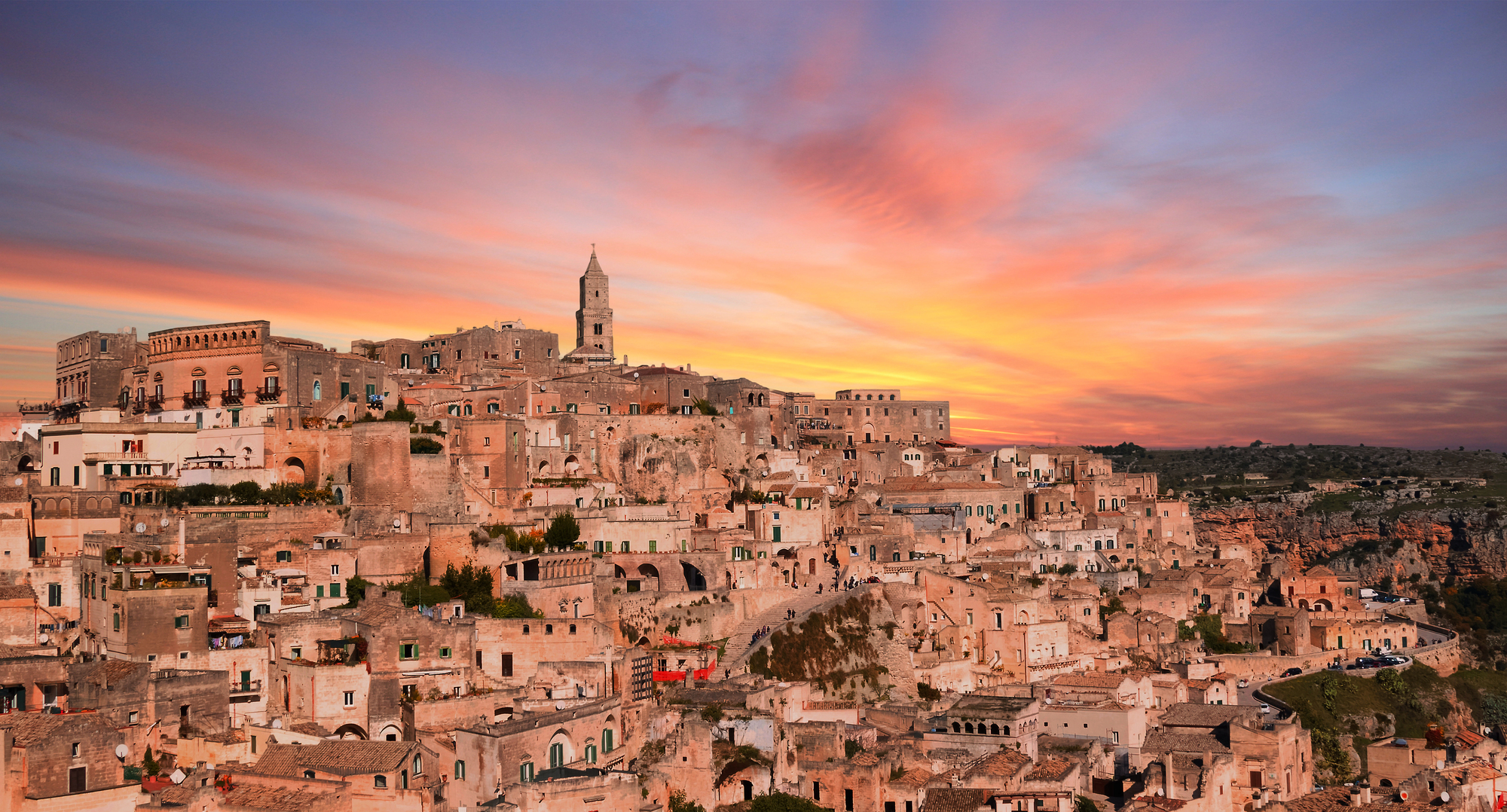
Rising above the Sassi on the highest point of the ridge is the 13th-century Cattedrale di Matera. It is a stunning example of Apulian Romanesque architecture dedicated to the Madonna della Bruna and Sant’Eustachio. The exterior is deceptively modest, but the interior reveals layers of artistic and spiritual history. Including a 14th-century fresco of the Last Judgement and intricate stone carvings that span centuries of craftsmanship.
The cathedral underwent a decade-long restoration and has emerged even more breathtaking than before. Visit in July if your schedule allows. This is when the Festa della Madonna della Bruna transforms the city into a spectacle of procession, devotion, and celebration that has been observed without interruption for over 600 years.
Casa Noha and Casa Grotta: Understanding How Life Was Lived
To truly understand the Matera cave dwellings, you need to see inside them as they once were. Casa Noha, housed in a restored cave in Sasso Caveoso, offers a multimedia exhibition that traces Matera’s history from ancient settlement through forced evacuation and eventual rebirth. It is an emotionally powerful experience that reframes everything you see when you walk back outside.
Casa Grotta di Vico Solitario goes one step further. This is a preserved cave home recreated to show what daily life looked like for a family living in the Sassi in the 1950s. It is complete with furniture, tools, and even the animals that shared the same space. It is humbling and fascinating in equal measure.
MUSMA: Contemporary Art in a 17th-Century Cave Palace
The Museum of Contemporary Sculpture Matera, universally known as MUSMA, is one of the most unexpected and wonderful surprises this city offers. It is housed in the interconnected caves and rooms of a 17th-century palace. The museum displays works by Italian and international sculptors in a setting that makes the juxtaposition of ancient and modern feel entirely natural. It is the kind of place you wander through slowly, letting the art and architecture speak to each other.
The Underground Cistern: Palombaro Lungo
Beneath Piazza Vittorio Veneto lies one of Matera’s best kept secrets. It is an enormous underground cistern called the Palombaro Lungo. Carved from the limestone over centuries, this vast subterranean water system once supplied the entire city. Tours take you down into its depths, where the scale of engineering and the silence of the space combine to create an experience that is both awe-inspiring and a little otherworldly.
Matera Italy Cave City as a Destination for the Modern Luxury Traveler
Why Matera Belongs on Your Luxury Italy Itinerary
When my clients think of luxury Italy, they tend to think of Lake Como, the Amalfi Coast, Tuscany. And all of those are extraordinary. But what I have found, working with high-achieving women who have traveled extensively and want something more than beautiful scenery, is that Matera offers something those destinations rarely can anymore: The feeling of genuine discovery.
The Matera Italy cave city is not overrun. The crowds have not yet erased the intimacy of the place. You can still walk through the Sassi in the early morning and feel as though you are seeing something private. Something that belongs to you and the stone and the soft light of the Mediterranean dawn.
And the luxury experiences here have quietly become world class. Cave hotels with minimalist interiors, local stone walls, and candlelit dining rooms have replaced what were once poverty-stricken dwellings. Spas carved into the rock. Wine lists anchored by the bold reds of Basilicata. Private guided tours with historians and archaeologists who bring the ancient cave city Italy to life in ways a solo wander never could.
This is exactly the kind of place I think of when a client tells me she wants to take her mother on a once-in-a-lifetime trip. Or when a couple celebrating a milestone anniversary wants something extraordinary and unexpected. Matera delivers on both counts.
More must-see small towns in Italy to add to your vacation bucket list.
Matera as a Multigenerational and Family Destination
One of the things I love most about recommending Matera to families, including multigenerational groups traveling with grandparents and older children, is how naturally it holds everyone’s attention. The history is accessible and visceral. You do not need to read plaques to feel it. You walk it and touch the rock walls. And you peer into caves that were homes not so long ago.
For the women I work with who are building memories with their families, this kind of destination is invaluable. There are no screens competing for attention. There is no splitting up into different interest groups. Everyone is looking at the same thing. Feeling the same sense of wonder. And that shared experience is exactly what my clients are really buying when they book a trip through me.
Girls’ Trips and Empty Nester Escapes in Matera
Matera also makes a remarkable destination for a friends’ getaway or an empty nester escape. The pace here is unhurried. Evenings in the Sassi, with the golden light fading over the ravine and an Amaro in your hand, are the kind of evenings you talk about for years afterward. The food culture is rooted in honest, exceptional ingredients. The local bread, Pane di Matera, holds Protected Geographical Indication status and is extraordinary. The wines of Basilicata, particularly those made from the Aglianico grape, are serious and underrated.
This is not a destination where you rush to check off a list. It is a destination where you settle in, breathe differently, and let yourself be moved.
A sample 9-day itinerary of Italy that may spark a few ideas for your next vacation.
Best Time to Visit the Matera, Italy Cave City
Spring and Autumn: The Sweet Spot
The best time to visit Matera Italy is spring (April through June) or autumn (September through October). During these months, the temperatures are comfortable for walking the Sassi. The light is extraordinary for photography. And the city is busy but not overwhelmed.
Spring brings wildflowers to Murgia Park and a fresh softness to the landscape. Autumn arrives with golden tones on the stone and a harvest energy in the local food and wine culture.
Summer in Matera
Summer in Matera is warm to hot. July in particular draws larger crowds, especially around the Festa della Madonna della Bruna. If you are visiting in summer, plan your outdoor exploration for early morning and late afternoon. The midday heat in southern Italy is best respected, not fought. The caves themselves stay naturally cool, which becomes one of their most practical charms during August.
Winter: The Quiet Season
Winter is Matera’s quietest season. For travelers who prefer having ancient places largely to themselves, it holds a particular appeal. The Sassi under a winter sky, or occasionally dusted with a light frost, looks extraordinary. Many restaurants and cultural venues remain open year-round. You will find that the city’s residents, freed from the rhythms of high-season tourism, are especially warm and welcoming.
Practical Notes for Visiting the Matera Italy Cave City
Getting There
The closest major airport is Bari, in the neighboring Puglia region. This is approximately one hour by car. Matera does not have its own train station connected to the main Italian rail network. So, a private transfer or rental car is the most comfortable and practical option for luxury travelers. This is the kind of logistical detail my clients trust me to handle before they even think to ask.
Pairing Matera with a Broader Southern Italy Itinerary
Matera pairs beautifully with a broader southern Italy journey. The Puglia region, directly to the east, offers its own extraordinary landscapes. The whitewashed trulli houses of Alberobello. The baroque splendors of Lecce. And the dramatic coastlines of the Salento peninsula. A combined Matera and Puglia itinerary, done properly and at the right pace, is one of the most memorable experiences in all of Italy.
The Amalfi Coast is also within reach for travelers building a longer southern Italy journey, though it is a different world in tone and energy. Matera’s quiet, contemplative atmosphere and the Amalfi Coast’s dramatic beauty and activity complement each other well.
How Much Time Do You Need?
Most travelers find that two to three nights in Matera is the ideal amount of time. One full day gives you the highlights. A second day lets you slow down and discover the layers. A third day is for the guests who, by the end of day two, cannot imagine leaving.
I have had clients who planned one night and called me asking how to extend their stay. That almost never surprises me.
The Matera Italy Cave City Is Waiting for You
There is a kind of travel that collects sights, and there is a kind of travel that collects feelings. Matera belongs firmly in the second category. The Matera cave city does not give itself away all at once. It reveals itself slowly, and every hour you give it, returns something new.
For the women I have the privilege of planning travel for, the ones who have worked hard for every experience they have, who want the people they love most in one place with no distractions, who are not buying a trip but buying time, Matera is one of the most powerful places I know.
If you are ready to see it for yourself, I would love to help you plan the journey.
So, are you ready to start planning a family vacation to explore the Matera Italy cave city?
If you said yes, I would like to invite you to schedule a planning session with me by clicking here. Clicking the link will take you directly to my digital calendar to schedule a time that is convenient for you.
And if you are not ready to explore Matera Village on a family vacation, you can sign up for my newsletter here. This will ensure you never miss any of the exciting travel information I share.

Tracy is the owner of Elite Travel Journeys, a luxury travel agency dedicated to crafting extraordinary, memory-making journeys for families, multigenerational groups, empty nesters, and solo female travelers. A proud military veteran and President of the Central PA Chapter of ASTA, Tracy brings both discipline and deep passion to everything she does. With a particular love for river cruising, especially Europe’s enchanting Christmas Markets, she has been turning travel dreams into life-changing experiences since 2014. Tracy believes that extraordinary travel doesn’t just take you somewhere new; it changes who you are.
Enter your Name and best Email Address to receive
On Your Next Family Vacation
We respect your privacy and will never share or sell your information.
3 Ways to See It All in Alaska


On Your Next Family Vacation
Click here for 10 Exciting Family Adventures
You Can Plan
NOW