
German Christmas Market Traditions No Shop Window Can Show You: Why a Christmas Market Cruise Germany Style Is the Only Way to Live Them
Forty-five minutes. That is how long our tour guide gave us to stand in the middle of the most beautiful Christmas market square I had ever seen. I had a glass of hot gluhwein warming one hand and my father in law’s arm resting on the other. Despite what the guide thought was a long time; I wasn’t ready when she started waving everyone back toward the bus. It took exactly that one rushed, watch checking market stop for me to understand that German Christmas market traditions were never meant to be experienced on someone else’s timer.
There is a slower way to see them. An option where you wake up already docked in the town square instead of circling for parking. And where the only clock you are racing is your own hunger for another slice of warm stollen. That way is a Christmas market river cruise, and once your family tries it, you will wonder why anyone visits Germany at Christmas any other way.
German Christmas Market Traditions No Shop Window Can Show You: Why a Christmas Market Cruise Germany Style Is the Only Way to Live Them
The German Christmas Market Traditions You Cannot Rush Through
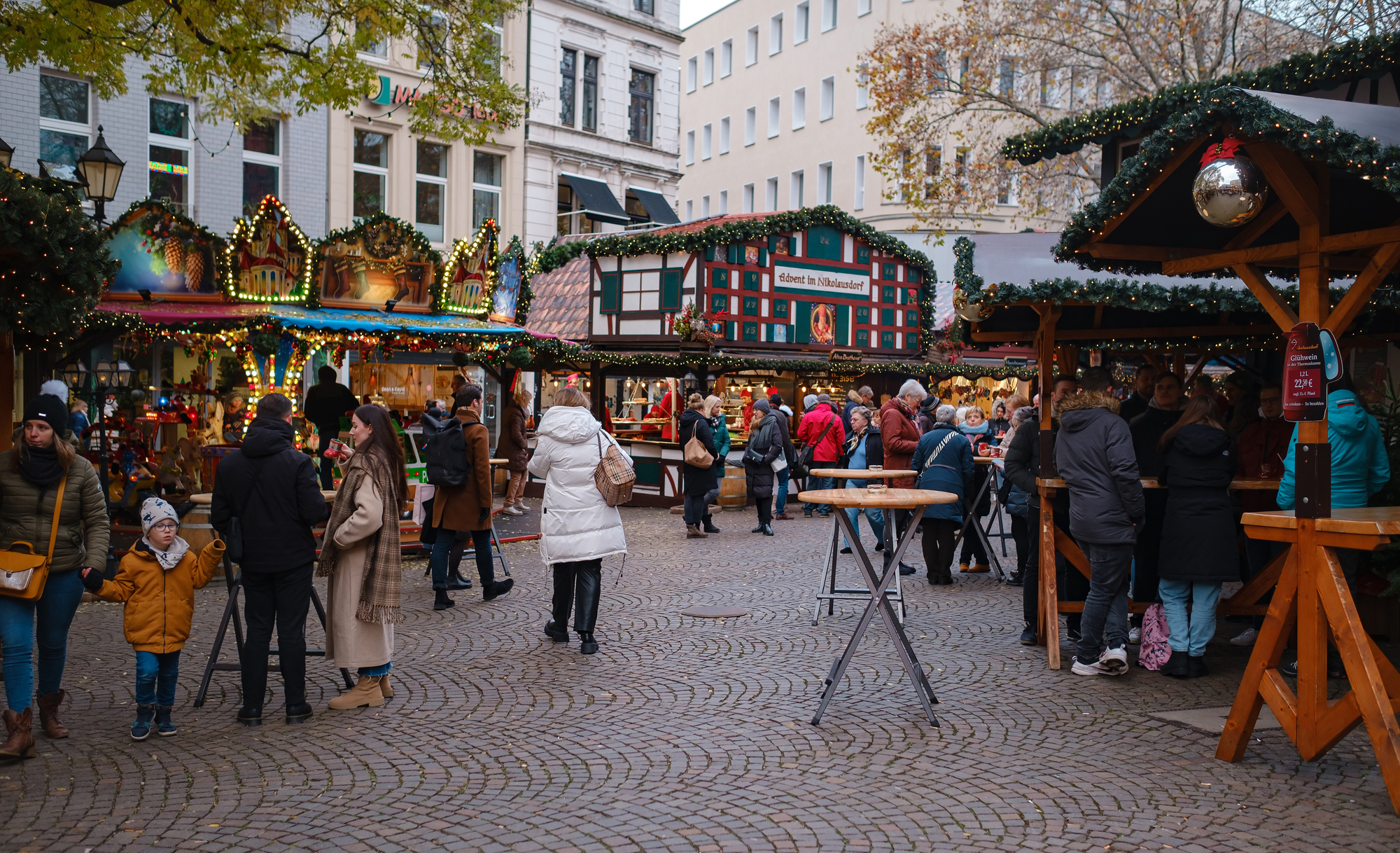
These are not window displays curated for a tour bus schedule. They are living, centuries old rituals that German families still practice every December. The same way your own family might still bicker over who carves the turkey. When you slow down enough to take part in them instead of only photographing them, the whole trip changes shape.
Centuries Old, Not Instagram Old
Germany is where the modern Christmas market began. The earliest ones trace back to the 1400s in cities like Dresden and Nuremberg. A few thousand markets open across the country every winter now. Each one is a little different depending on the region, the local specialty food, and the ornaments the town is known for. None of that was built for a camera.
These German Christmas market traditions took root in a simple instinct: Families wanted a reason to gather in the cold and call it a celebration, long before anyone thought to hashtag it.
Why a Christmas Market Cruise Germany Route Fixes the Rush
On a land-based tour, you see a market for the length of a bathroom break. On a Christmas market cruise Germany route, the ship becomes your hotel and your transportation in one. The ship glides overnight from town to town so you wake up already inside the next market instead of stuck on a highway trying to get there.
Nobody is checking their watch. Nobody is herding you back to a parking lot. You simply step off the gangway into the square, and the whole day belongs to your family.
The Traditions Themselves, Lived Not Watched
These are not traditions you observe from behind a rope line. They are things your family will do together, one stall and one street corner at a time.
The German Christmas Market Traditions Worth Slowing Down For
Some of these traditions live inside the markets themselves. Others happen back on the ship, or in a quiet corner of a town square before the crowds arrive. Here is what your family can expect to taste, touch, and take part in along the way.
Gluhwein, Lebkuchen, and the Markets That Started It All

The markets are where most German Christmas market traditions reveal themselves first, one stall at a time. Every stall releases its own scent into the cold air: Roasting chestnuts here, sizzling bratwurst there, and underneath it all, the warm spice of gluhwein simmering in a pot big enough to fill a hundred mugs before noon.
Take a sip of your gluhwein and you will understand why Germans hold theirs with both hands instead of rushing it. Nearby, a vendor hands your teenager a piece of lebkuchen. It is a soft, heart shaped gingerbread often iced with a holiday message piped across the top. She bites into it, looks up, and asks why it is shaped like a heart.
Nobody quite remembers, and that is part of the charm. Some traditions do not need an explanation to be worth keeping.
St. Nicholas Day: Why Nobody Outgrows Leaving Boots by the Door
On the evening of December 5th, German children still set their cleaned and polished boots outside the door before bed. By morning St. Nicholas has filled them with candy, nuts, and small gifts.
Here is the part nobody tells you: It is just as fun at twenty-five as it is at five. If your cruise happens to fall over that date, do not be surprised if your adult children start leaving their shoes by the cabin door that night, laughing about the whole idea, and then checking them first thing in the morning anyway.
Some traditions are not really about gifts. They are about the excuse to still feel like a kid with the people who remember you as one.
Check out some Christmas traditions from around the world.
The Wooden Ornaments, Pyramids, and Trees That Predate Instagram by Centuries
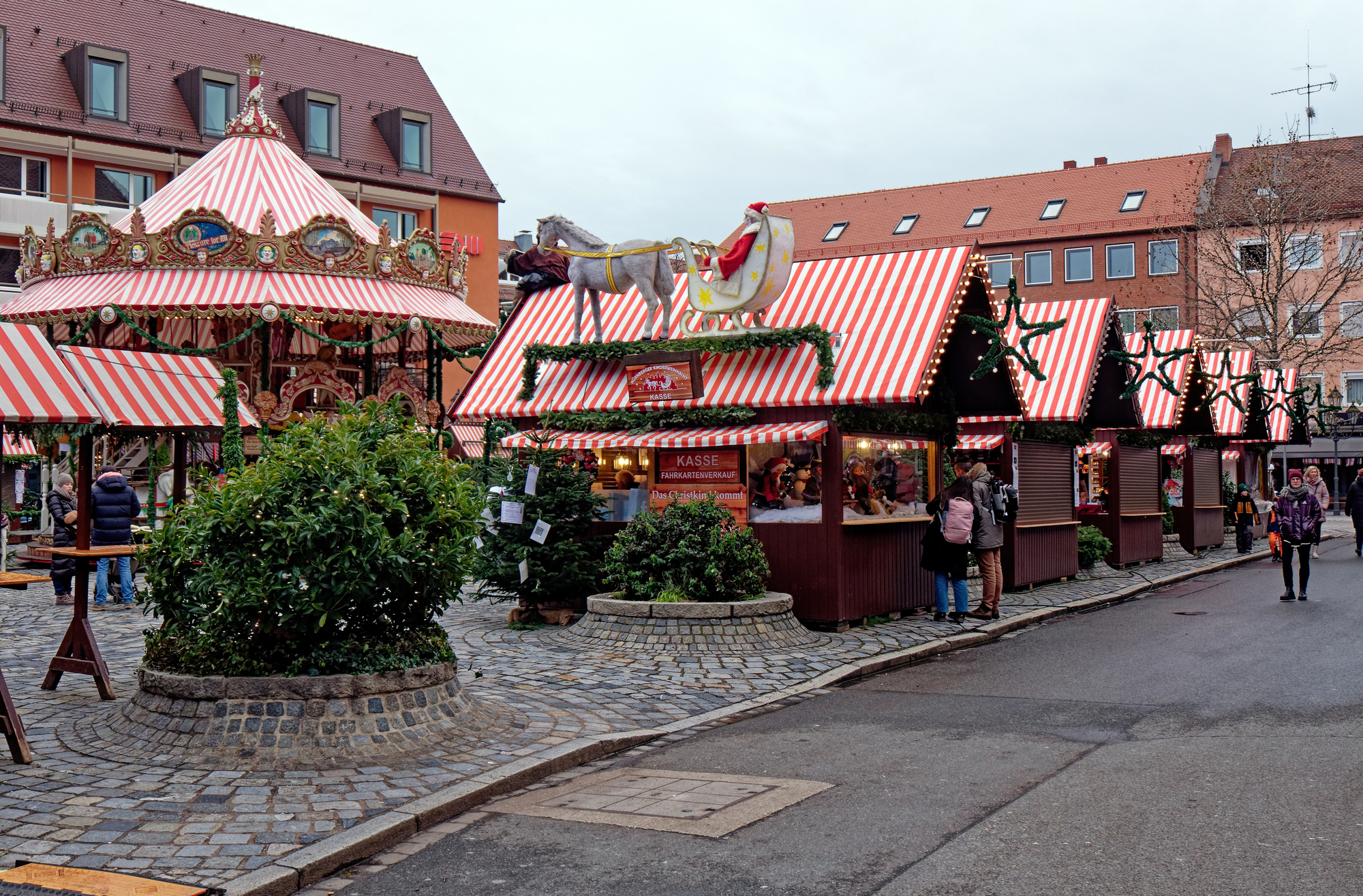
At nearly every market stall, you will find weihnachtsengels. They are small wooden Christmas angels, carved and painted by hand and hung on trees or tucked into windowsills all over the country.
Your son picks one up, turns it over looking for a manufacturing sticker, and finds nothing but the faint pencil mark of the artisan who made it. Close by, a Christmas pyramid spins slowly on its own. A wooden carousel stacked with a carved nativity scene, powered entirely by the heat rising off its own ring of candles.
Germany has decorated fir trees at Christmas since the 1500s, back when families used nuts, apples, and paper flowers instead of glass and lights.
The towns you visit still lean into that same handmade spirit today. Nothing here was mass produced, and you can feel the difference the moment you hold it.
Stollen, Stille Nacht, and the Traditions Worth Tasting and Hearing
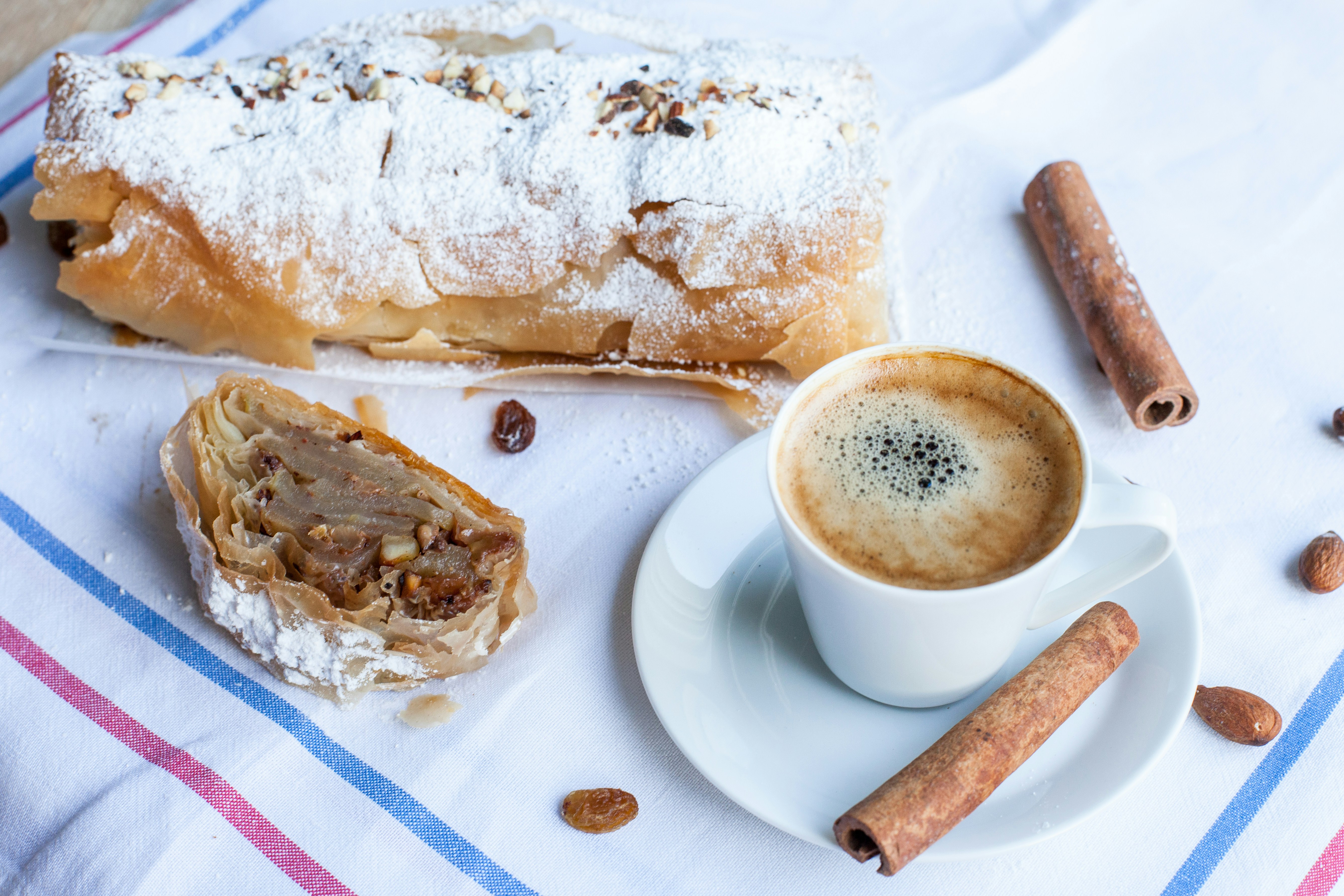
Stollen is the fruitcake you did not know you loved: A dense, buttery bread studded with dried fruit and nuts. It is dusted so heavily in powdered sugar it looks like it just came in from the snow.
Dresden holds an entire festival dedicated to it every year. Once your family splits a slice fresh from a market stall, you will understand why.
Somewhere nearby, almost on cue, a street musician usually sings Stille Nacht, Heilige Nacht, the carol you know as Silent Night. It was first performed in a small Austrian church back in 1818. Hearing it drift across a German Christmas market, half a world and two centuries away from that first performance, tends to quiet even the loudest member of your group for a moment.
Advent Wreaths, Advent Calendars, and a Countdown Worth Keeping
Four Sundays before Christmas, German families build an advent wreath out of fir or pine branches. They tuck four candles into the center and light one more candle each Sunday until all four are burning on Christmas Eve.
Advent calendars follow the same slow countdown. One small flap opened each day to reveal a tiny scene underneath.
Neither tradition needs young children to work. Plenty of German households keep lighting that wreath long after the kids are grown. There is no reason your family could not start keeping these German Christmas market traditions too. Even if it just means a video call every Sunday night so everyone can watch the next candle get lit together.
Not Every Christmas Market Cruise Germany Trip Works for Every Family

Every “best Christmas market river cruises” roundup you find online will show you the same glittering photo: A ship gliding past a lit-up castle with snow dusting the deck chairs.
What none of those lists mention is that experiencing German Christmas market traditions with your whole family first requires clearing one hurdle most people never think to check. A meaningful number of these cruises quietly set a minimum age, which means a family with older teenagers or adult children is fine. However, a family hoping to bring along a young grandchild will not be able to.
I have watched more than one family fall in love with an itinerary for weeks before finding that detail buried in the fine print. This is why it is so important to work with an expert travel advisor like me, so you don’t find things like this when it is almost too late.
Why So Many River Cruises are Adults Only
River ships are small, often carrying somewhere between one and two hundred passengers. Most are built around enrichment like wine pairings, onboard lectures, quiet lounges, and excursions with a fair amount of walking on cobblestone streets. There is rarely a kid’s club, a pool, or a dedicated play space, because the ship was not designed with young children in mind.
For a family with older teenagers or adult children, none of that is a drawback. It is closer to a perk: No chaos in the hallways and no competing for deck chairs with someone else’s toddler. Just a calm, grown-up pace that still leaves plenty of room for your own family’s noise and inside jokes.
What to Look for in a Family Christmas Market River Cruise
Before you book, ask three questions. First, what is the minimum age, since this single detail eliminates half the options before you even look at an itinerary. Second, how much walking does a typical excursion day involve, since a Christmas market cruise for families with grandparents who tire easily needs a different pace than one built for four able bodied adults. Third, are there quieter, opt out days built into the schedule, and remember that the best river cruise line for families Christmas travelers rave about is not always the one with the busiest itinerary.
A true family Christmas market river cruise is not defined by a brand name. It is defined by whether the pacing, the age policy, and the excursions genuinely fit the specific mix of people you are bringing along. This is exactly why a multigenerational Christmas market cruise deserves these answers before it deserves a deposit.
What nobody tells you about taking your family on a Christmas market river cruise.
Choosing Your River: Rhine or Danube
The Rhine Christmas Market Cruise Route
A Rhine Christmas market cruise typically threads together Germany, France, and sometimes the Netherlands. The stops might include Cologne’s cathedral towering over its market stalls, Strasbourg’s half-timbered old town glowing under strings of lights, and Rudesheim’s wine village tucked into the hillside.
Castles slide past your cabin window at dusk, one after another, close enough that you stop reaching for your phone and just watch. It is a route built for families who want a little bit of everything. One culture blending into the next country over the course of a single week with dinner back on the ship each night no matter which border you crossed that day.
Check out some of the different Christmas markets in Germany.
The Danube Christmas Market Cruise Route
A Danube Christmas market cruise leans further into Central Europe. It often connects Germany with Austria and Hungary. Think Nuremberg or Regensburg’s medieval squares, Vienna’s palace lit markets full of mulled wine stalls, and Budapest’s grand riverside skyline glowing gold after dark. It tends to feel a touch more formal, a touch more old-world. Some families love this option, and others find it slower paced than expected.
If your family wants castles and wine villages, consider the Rhine. If your family wants palaces and grand old capitals, I recommend the Danube. Either way, the German Christmas market traditions waiting at each stop are the real reason you are there.
More European Christmas markets to consider visiting during your next vacation.
When to Go and What to Pack for a Christmas Market Cruise
When Do German Christmas Markets Open
German Christmas markets typically open during the last week of November and run through December 23rd or Christmas Eve. Although, a handful of cities such as Vienna and Prague keep their Christmas markets going into early January.
The first two weeks of December tend to be the sweet spot: The markets are in full swing, the decorations are still fresh, and the crowds have not yet hit their pre-Christmas peak.
Because Christmas sailings only run for about six weeks a year and cabins are limited on these smaller ships, the best departures often sell out eight to ten months in advance. So, this is not a trip to plan the way you would a spring getaway.
What to Pack for a Christmas Market Cruise
Nothing surprises first-time cruisers more than how cold an evening market walk truly gets. Especially standing still with a mug of gluhwein instead of moving around to stay warm.
Real, waterproof boots matter more than a cute pair, since cobblestones get slick and market grounds get muddy fast. Pack real gloves, not the thin kind, along with a hat that fully covers your ears. Add a scarf you will end up wearing in every single photo to your suitcase, because you will need it. Layers matter more than one heavy coat, since ship cabins and onboard restaurants run warm and you will want to peel down quickly once you are back inside.
A quick packing checklist that covers most of it:
- Waterproof, already broken in boots
- A real winter coat, not a fashion jacket
- Thin gloves you can still use your phone with, plus a warmer pair for standing at the markets
- A scarf and a hat that covers your ears
- Layers you can shed the moment you are back on board
Why This Is the Trip Your Family Will Talk About at Every Christmas After This One
Back on that first, rushed tour, my father-in-law never got to finish his gluhwein before we were waved back onto the bus. On the river cruise we took the following year, he finished three while sitting on a bench in Rudesheim. All while my kids wandered the stalls and came back with a wooden ornament for their grandmother.
Nobody was checking their watch. That is the difference a slower trip makes, and it is why families who try a Christmas market river cruise once tend to start planning the next one before they have even unpacked.
German Christmas market traditions were never meant to be rushed through in forty-five minutes. Give your family the kind of trip where nobody has to decide between enjoying every moment and having the experiences you want.
I am currently booking a Christmas market river cruise in Germany for December 2027. If you have been wanting to experience Germany’s Christmas markets with your family, now is the time to book this incredible vacation.
Are you ready to book a river cruise and experience these German Christmas market traditions?
If you said yes, I would love to invite you to click here to set up a time for us to chat. Clicking the link will take you directly to my digital calendar to schedule a time that is most convenient for you.
And if you are not quite ready to book a Christmas market river cruise in Germany, or any other family vacation, you can easily sign up for my newsletter here. This will ensure we stay connected as I share travel information with you.

Tracy is the owner of Elite Travel Journeys, a luxury travel agency dedicated to crafting extraordinary, memory-making journeys for families, multigenerational groups, empty nesters, and solo female travelers. A proud military veteran and President of the Central PA Chapter of ASTA, Tracy brings both discipline and deep passion to everything she does. With a particular love for river cruising, especially Europe’s enchanting Christmas Markets, she has been turning travel dreams into life-changing experiences since 2014. Tracy believes that extraordinary travel doesn’t just take you somewhere new; it changes who you are.
Enter your Name and best Email Address to receive
On Your Next Family Vacation
We respect your privacy and will never share or sell your information.
3 Ways to See It All in Alaska


On Your Next Family Vacation
Click here for 10 Exciting Family Adventures
You Can Plan
NOW