Mountain Gorilla Trekking in Uganda: What It Feels Like to Look a Silverback in the Eyes
There is a moment deep inside the mist-soaked forests of Bwindi, when everything you thought you knew about what travel could feel like simply dissolves. Mountain gorilla trekking in Uganda is the reason why. You are standing in the oldest rainforest on earth, your boots caked in red mud, your breath coming a little faster than usual at elevation, and then the guide ahead of you stops and goes still. You follow his gaze into the green shadows. And there he is. A silverback, massive and unhurried, watching you with calm, intelligent eyes that hold something ancient and uncomfortably familiar. He is not afraid of you. He simply sees you. And in that single, suspended moment, you will understand completely why people say this experience changes everything.
Mountain gorilla trekking in Uganda is not just a line item on a gorilla trekking Africa bucket list. It is the trip that resets your understanding of what the world is capable of giving you.
Mountain Gorilla Trekking in Uganda: What It Feels Like to Look a Silverback in the Eyes
What Makes Mountain Gorilla Trekking in Uganda Unlike Anything Else on Earth
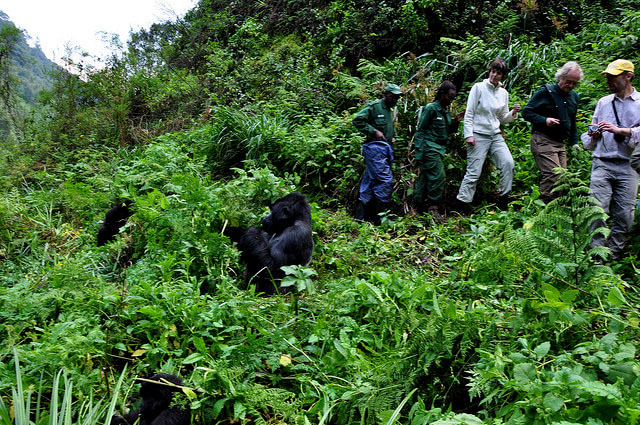
Uganda is home to more than half of the world’s remaining mountain gorillas. A population so critically endangered that fewer than 1,100 exist in the wild across the entire planet.
They are found in only three countries: Uganda, Rwanda, and the Democratic Republic of Congo. In Uganda, they live within two protected areas: Bwindi Impenetrable National Park and Mgahinga Gorilla National Park. Both nestled in the remote, verdant southwest of the country.
What makes a gorilla safari Uganda experience so singular is the intimacy of it. This is not a game drive where animals are spotted at a distance through binoculars.
This is a regulated, deeply personal encounter where you stand within a few meters of a wild gorilla family.
You simply exist in their space for one extraordinary hour. The encounter is guided, unhurried, and governed by rules designed to protect the animals as much as the people watching them.
The gorillas are habituated. This means they have been gradually accustomed to the presence of human observers over a period of years by a dedicated team of researchers and trackers. They are not tame. They are not performing. The gorillas are simply living, and you are being granted the profound privilege of watching them do it.
The Four Sectors of Bwindi Impenetrable National Park
The Bwindi Impenetrable Forest gorilla trek is the most popular and widely sought-after gorilla trekking experience in Africa, and for good reason. The forest itself is a UNESCO World Heritage Site. It is one of the oldest and most biodiverse rainforests on the continent. Bwindi is divided into four distinct trekking sectors, each with its own character, terrain, and resident gorilla families.
Buhoma
Buhoma is the most established sector. It is the one most travelers enter first. It sits in the northern part of the park and offers a well-developed infrastructure. You will have access to multiple habituated gorilla families including the famous Mubare group. This group was the first to be habituated for tourism in Uganda.
Buhoma’s terrain is challenging but approachable. Its proximity to community villages makes it a rich experience beyond the trek itself.
Ruhija
Ruhija sits at the highest elevation of all four sectors. This means the forest here is particularly dense, the air is cooler, and the birding is exceptional.
It is a quieter sector with fewer daily visitors and a wilder, more remote feel. Serious trekkers and those who prefer fewer crowds tend to gravitate toward Ruhija.
Rushaga
Rushaga is located in the southern zone of Bwindi and has the largest number of habituated gorilla families of any sector in the park. It is also the only place in the world where you can do the Gorilla Habituation Experience. This is a special permit that allows you to spend four hours alongside a semi-habituated gorilla family and the researchers working with them, rather than the standard one hour.
Nkuringo
Nkuringo offers some of the most dramatic scenery in all of Bwindi. This area is perched on a ridge with sweeping views across the valleys. The terrain here is among the most challenging in the park, steep and unpredictable. But the reward is a sense of true wilderness that few other trekking experiences in Africa can match.
When you work with a luxury travel advisor like me to plan your gorilla safari Uganda trip, your sector assignment, lodge placement, and gorilla family will all be matched thoughtfully to your travel style, fitness level, and what kind of experience you want to have.
Best Time to Go Gorilla Trekking in Uganda
The best time to go gorilla trekking in Uganda is during the dry seasons. Those seasons run from June through August and again from December through February. During these months, the forest trails are firmer underfoot, the air is clearer for photography, and the physical demands of the trek are somewhat easier to manage.
The dry season is also peak season for tourism, which means permits sell out quickly, sometimes a full year in advance for the most coveted dates.
Trekking in the Rainy Season
That said, gorilla trekking in Bwindi is possible and genuinely rewarding all year round. The rainy seasons, from March through May and October through November, bring a lush, emerald intensity to the forest that is visually breathtaking. Waterfalls run full and loud, the canopy glistens, and the gorillas themselves are easier to find close to the forest floor.
Permit availability is also better, and the sense of solitude in the forest is heightened. If you are flexible with timing, the shoulder seasons hold their own kind of magic.
What never changes, regardless of season, is the mud. Bwindi earned the word “impenetrable” for a reason. Come prepared for it, embrace it, and wear it like a badge of honor.
Mountain Gorilla Trekking Uganda: What to Expect on Trek Day
Understanding gorilla trekking Uganda what to expect is one of the most important parts of planning this trip, because the experience is unlike any other wildlife encounter and preparation is everything.
The Morning Briefing
Your trek day begins early, typically with a pre-dawn departure from your lodge so you can reach the park headquarters by 8:00 a.m. At the ranger station, you will attend a briefing led by the Uganda Wildlife Authority.
Rangers will share information about the specific gorilla family you have been assigned to, show you a short video about the animals and trekking rules, and answer any remaining questions. This is the moment when the experience becomes tangible and the excitement in the group becomes electric.
The Trek into the Forest
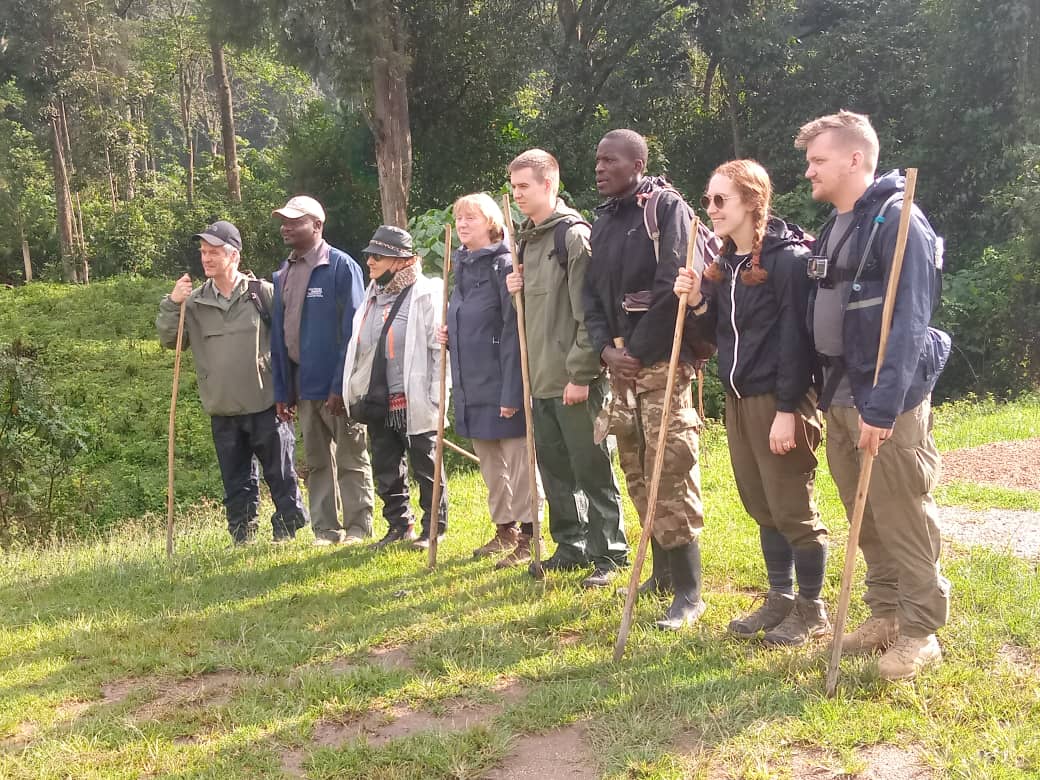
From the ranger station, you will set out on foot with a guide, armed rangers, and experienced trackers who have often been out since before dawn locating the gorilla family’s overnight nest. The terrain of Bwindi is steep, dense, and wildly alive. You will use wooden walking sticks provided at the trailhead and grab onto vines and branches for balance. You will push through undergrowth that seems to close behind you as you move. And you will feel, with increasing certainty, that you are somewhere truly wild.
The length of the trek varies entirely depending on where the gorillas happen to be on that particular morning. Some days they are found within 30 to 45 minutes of the trailhead. Other days, the trackers lead you deeper into the forest for two, four, or even six hours.
The unpredictability is part of the experience. You cannot schedule a silverback.
Face to Face with Gorillas Uganda
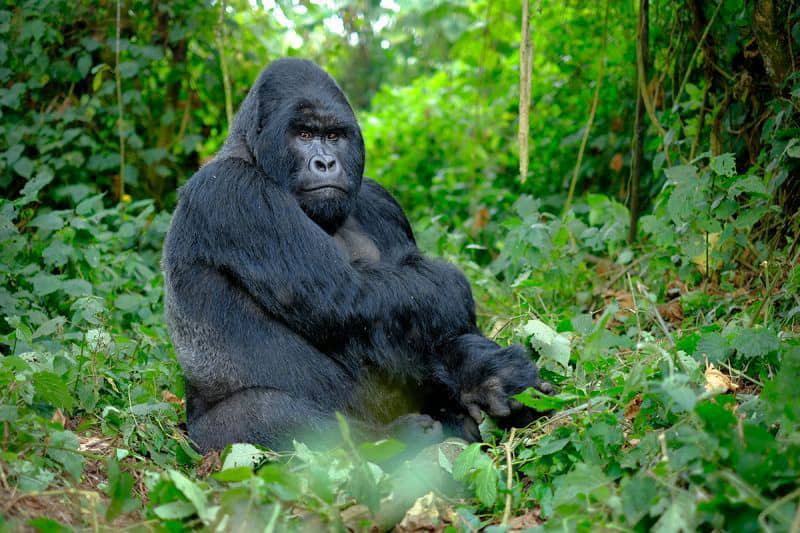
When the trackers signal that you have arrived, you will slow your approach and move quietly into position. And then you see them. Being face to face with gorillas in Uganda means being entirely present in a way that daily life rarely demands.
You will hear them before you fully see them. A low rumble. The crack of a branch. A baby shrieking with play. Then the green parts and there they are, an entire family going about their morning, foraging, nursing, grooming, napping.
Your one hour with the gorillas is strictly enforced by your rangers. No exceptions. This rule exists to protect the animals from the stress of prolonged human contact. Understanding why it exists makes it easier to honor.
You are allowed to photograph and observe freely. But you must stay at least seven meters from the animals unless a gorilla approaches you, which does happen. When a young gorilla wanders curiously toward your boots, you stand very still and feel your heart stop.
Gorilla Trekking Uganda Physical Fitness Requirements
This is one of the most common questions travelers ask, and the honest answer is nuanced. Meeting gorilla trekking Uganda physical fitness requirements does not mean you need to be an athlete. It does mean you need to be realistic and prepared.
The terrain inside Bwindi is steep, uneven, and densely vegetated. Trekkers navigate through root systems, over muddy inclines, and across ridges at elevations between 1,500 and 2,600 meters. If you can walk steadily for several hours on challenging terrain and manage hills and uneven footing without significant difficulty, you are likely fit enough to complete the experience.
Preparation makes an enormous difference. In the weeks before your trip, walking daily with a weighted daypack, climbing stairs, and doing short hikes on varied terrain will help your body adjust to what Bwindi demands. The altitude is a factor for many visitors, especially those coming from sea level. So, arriving in Uganda a day or two early to acclimatize is always wise.
The Porter: Your Best Decision
Hiring a local porter is one of the single best decisions you can make for this trek. It matters beyond your personal comfort. Porters carry your daypack, steady you on difficult terrain, and provide an extra hand on steep descents. They are members of the local communities surrounding Bwindi. The income they earn from tourism is directly tied to gorilla conservation. When you hire a porter, you are funding the ecosystem of protection that keeps the gorillas safe.
There is no upper age limit for gorilla trekking. The oldest person documented to complete a trek at Bwindi was 94 years old. Rangers are skilled at tailoring the pace and assigning gorilla families with shorter trekking routes when needed. With honest communication and good planning, the experience is accessible to a wide range of fitness levels.
Mountain Gorilla Trekking Uganda Packing List: What to Wear
What you pack and wear on trek day matters more than most people anticipate. The right gear makes the difference between a miserable slog and a comfortable, exhilarating adventure through one of the world’s great forests.
- Footwear: Waterproof, mid-to-high-ankle hiking boots that are already broken in before your trek date. This is non-negotiable. New boots on a Bwindi trail mean blisters before you have walked an hour. A blistered foot can end your trek. Deep treads matter on muddy slopes.
- Clothing: Long-sleeved shirts and full-length trousers made from lightweight, moisture-wicking fabric. Coverage protects you from stinging nettles, thorns, and insects, all of which are present in abundance inside the forest. Layers are your friend, as mornings at elevation start cool and warm through the day.
- Rain gear: A lightweight, packable rain jacket or a high-quality poncho. Rain can arrive without warning in Bwindi regardless of season. You want to stay dry without adding weight.
- Gloves: Garden-style work gloves. This is one of the most underestimated items on the gorilla trekking Uganda packing list of what to wear. Veterans of Bwindi will tell you emphatically: Bring gloves. You will grab vines and thorny branches constantly for balance, and bare hands suffer for it.
- Additional essentials: A hat with a brim for sun and rain coverage. High-DEET insect repellent. Sunscreen. A small personal first-aid kit with blister plasters, pain relief, antihistamine, and rehydration salts. Plenty of water and light snacks for the trail. A small camera or your phone fully charged, with a waterproof case or bag. Cash for tipping your guide, trackers, and porter.
- Before you travel: Confirm that your yellow fever vaccination is current and documented. Uganda requires proof of yellow fever vaccination for entry. Your certificate may be checked at your departure airport as well as on arrival.
Ethical Gorilla Trekking Uganda: Why Your Visit Matters

One of the questions increasingly asked by thoughtful, high-value travelers is whether ethical gorilla trekking Uganda conservation principles are genuinely upheld. The answer is yes and understanding why changes the meaning of the experience.
Mountain gorillas share approximately 98 percent of their DNA with humans, which also means they are extraordinarily vulnerable to human-borne illnesses. The strict protocols of the Uganda Wildlife Authority, including the seven-meter minimum distance, the eight-person group cap, and the one-hour time limit, exist to protect the animals from disease transmission and behavioral disruption.
The permit fees paid by every trekker are not simply access charges. They fund anti-poaching rangers, community development projects in the villages surrounding Bwindi, veterinary care for the gorilla families, and the habituation research programs that make the entire experience possible. In the decades since regulated gorilla tourism began, mountain gorilla populations have grown. This is tourism that actively contributes to conservation rather than extracting from it.
Choosing to hire a porter, buying locally made crafts from community vendors at the park, and selecting a tour operator committed to responsible practices all extend the impact of your visit beyond the forest and into the lives of the people who protect it every day.
Adding a Gorilla Safari in Uganda to a Broader East Africa Itinerary
Gorilla trekking is a transformative centerpiece for a broader gorilla safari in Uganda experience. Bwindi pairs beautifully with other East African highlights for travelers who want to go deeper into the continent.
Within Uganda, chimpanzee tracking in Kibale Forest National Park offers a completely different primate encounter with a forest that holds the highest density of chimpanzees in Africa. Queen Elizabeth National Park adds classic savanna wildlife, including the famous tree-climbing lions of the Ishasha plains, elephant herds, and Kazinga Channel boat safaris.
For those arriving through or combining with Rwanda, the drive from Kigali to Bwindi takes approximately three to four hours. This makes a cross-border itinerary a practical and richly rewarding option.
Uganda also connects naturally with Kenya via a daily direct flight between Entebbe and Nairobi. This opens the door to a combination itinerary that includes gorilla trekking once in a lifetime experience in Bwindi followed by the Masai Mara, the Serengeti, or the Kenyan coast.
This is the kind of layered, multi-destination journey that a luxury travel advisor builds around your specific vision. Not from a template, but from a real conversation about what moves you and what you want your travel to feel like.
Check out my multigenerational safari guide for Africa before you book your next trip.
Mountain Gorilla Trekking Uganda: The Moment You Will Carry Forever
There will be a point during your hour with the gorilla family when you stop taking photographs. It will happen naturally, without deciding to do it. You will simply put the camera down and stand there, watching a mother nurse her infant, or a juvenile wrestle with his brother, or the silverback shift his enormous weight and look directly at you with an expression that holds something you cannot name but recognize completely.
That is the moment that mountain gorilla trekking in Uganda exists to give you. Not the photographs, though they will be extraordinary. Not the story to tell at dinner, though it will stop every room. The moment itself: Standing in an ancient forest, facing an ancient animal, and understanding without words that the world is bigger and more magnificent than your schedule has allowed you to remember.
You came to Uganda to see a gorilla. You will leave knowing you were also seen.
So, are you ready to book a family vacation to go mountain gorilla trekking in Uganda?
If you said yes, I would like to invite you to schedule a planning session with me by clicking here. Clicking the link will take you directly to my digital calendar to schedule a time that is convenient for you.
And if you are not quite ready to go gorilla trekking in Uganda for your next family vacation, you can always sign up my newsletter here. This will ensure you always receive all the travel information I share.

Tracy is the owner of Elite Travel Journeys, a luxury travel agency dedicated to crafting extraordinary, memory-making journeys for families, multigenerational groups, empty nesters, and solo female travelers. A proud military veteran and President of the Central PA Chapter of ASTA, Tracy brings both discipline and deep passion to everything she does. With a particular love for river cruising, especially Europe’s enchanting Christmas Markets, she has been turning travel dreams into life-changing experiences since 2014. Tracy believes that extraordinary travel doesn’t just take you somewhere new; it changes who you are.
Enter your Name and best Email Address to receive
On Your Next Family Vacation
We respect your privacy and will never share or sell your information.
3 Ways to See It All in Alaska


On Your Next Family Vacation
Click here for 10 Exciting Family Adventures
You Can Plan
NOW