12 Natural Wonders Your Family Should See Together, and the Right Age for Each
Somewhere in a family photo album, there is a toddler asleep in a stroller with the Grand Canyon glowing behind her. She will never remember a single minute of it. That is the quiet risk with natural wonders to visit with kids: The right place at the wrong age becomes a beautiful photo of a moment nobody felt.
I plan these trips for a living, and the pattern never changes. A four-year-old falls for the wonder she can hear, splash in, or touch. A ten-year-old falls for the one that answers his questions. A fourteen-year-old falls for the one that took real effort to reach. And Grandma falls for the one where she can sit on a bench and watch all three of them at once.
This guide gathers the best natural wonders for a family vacation, twelve of them, and pairs each one with the age that it’s best for. Some are a day’s drive from home. Others are at the far edge of the map. Together they make a list of places kids should see before they grow up, with an honest note on when each one is worth the trip.
12 Natural Wonders Your Family Should See Together, and the Right Age for Each
How Do You Know Which Natural Wonder Fits Your Child’s Age?
The right age for a natural wonder is the age when your child can feel it, not only see it. Picture the same canyon rim three times. At four, your daughter cares more about the squirrel at her feet than the mile of open air in front of her. At ten, she counts the rock layers and asks how long each one took. At fourteen, she wants to hike below the rim and see it from the inside.
Same canyon. Three completely different trips. That is why I choose natural wonders to visit with kids by age first and fame second.
What a Child Needs From a Wonder at Each Stage
Under six, children need a wonder that arrives all at once. Thundering water, a geyser on a countdown, and a beach that glows under their toes. Walks stay short, naps stay sacred, and bedtime is not negotiable.
Between six and eleven, curiosity takes over. These kids want stories, badges, and answers. They can walk a few miles, sit through a boat ride, and stay up past midnight once if the payoff is worth it.
From twelve on, effort becomes part of the reward. Rough roads, thin air, and long days in a vehicle stop being obstacles and start being the story they tell their friends. A teenager will forgive a five-hour drive if the place at the end feels like nowhere anyone else has been.
Why Bringing the Grandparents Changes Everything
The best multigenerational family vacation destinations bring the wonder to you. Boardwalks, shuttles, boat decks, and viewpoints you can reach from a parking lot let three generations stand side by side without anyone sitting out.
If someone in your group uses a wheelchair or a walker, or simply tires after a mile, accessible natural wonders for limited mobility should shape the shortlist before anything else. Picture a grandfather on a bench with his granddaughter on his lap while the teenagers scramble over the rocks below. Nobody misses anything. Everybody gets their own version of the day.
Natural Wonders to Visit with Kids of Any Age, Toddlers Included
These four work whether your youngest rides in a carrier or your oldest is pushing eighty. Among all the natural wonders of the world for families, they are the gentlest starting point, because the wonder shows up on its own schedule instead of depending on little legs. If you are building a first list of natural wonders to visit with kids, begin here.
Niagara Falls, Where the Roar Arrives Before the View
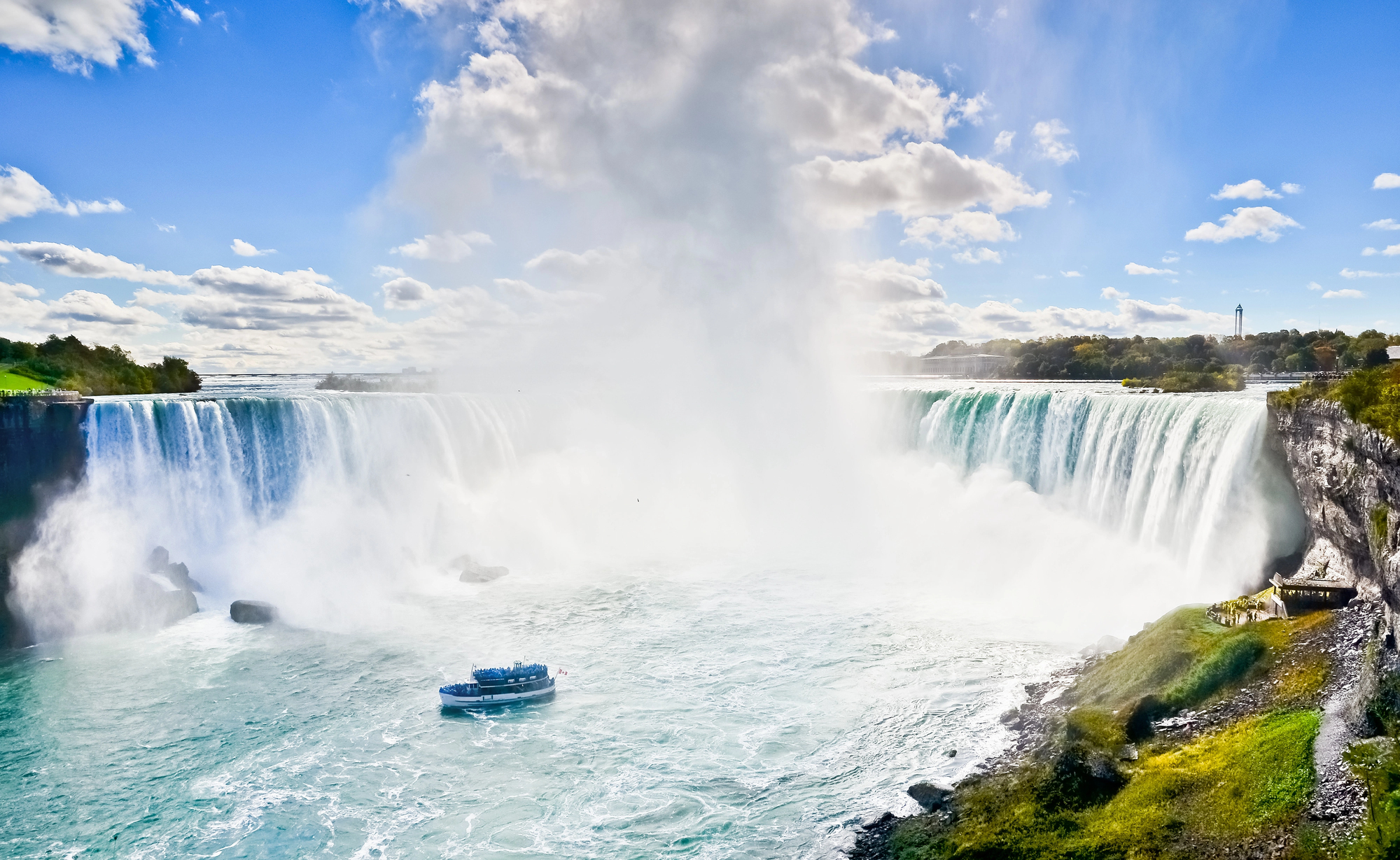
You hear Niagara before you see it. A low rumble rolls through the trees. Then the mist finds you, cool on your face even on a July afternoon. Your four-year-old squeals inside a crinkly poncho as the boat noses toward the base of the falls and the spray turns the whole world white.
It belongs on any list of the natural wonders of the United States because it asks nothing of anyone. No trail, no altitude, and no early alarm. The falls straddle the border between New York and Ontario. Overlooks on both sides are a short stroll from the parking areas.
Best Age and Best Season
Any age works. However, toddlers may love it most, because noise and splash are their favorite languages. The boats that carry you into the mist run seasonally, roughly from spring into fall, weather permitting. They pause through winter when ice takes over the river.
Winter brings its own reward: Frozen spray coating every railing and tree like sugar glass. Summer brings the warmest mist and the biggest crowds. An early morning start keeps the day calm.
Bringing the Grandparents
On the Canadian side, an elevator and an accessible ramp lead down to the boats. Family-friendly accessible restrooms are located near the main overlook. Not every attraction around the gorge is accessible, though, including the antique cable car that crosses the whirlpool. I check each stop against your group before anything gets booked.
Magical wonders to see during your family vacation.
Yellowstone’s Geyser Basins and Their Boardwalks
The crowd goes quiet before Old Faithful does. Hundreds of people lean forward on the benches, a little boy whispers a countdown, and then the ground hisses and a column of white water climbs into the sky. Ten minutes later he is giggling about the rotten egg smell drifting off the hot springs.
Yellowstone earns its place among the best national parks for kids because it feels alive. Pools steam in colors that look painted on. Mud bubbles like a pot on the stove. A bison might stop traffic outside your car window. Grand Prismatic Spring, ringed in orange and blue, can hold a child’s attention longer than any screen.
Why Boardwalks Make This the Easiest Wonder for Three Generations
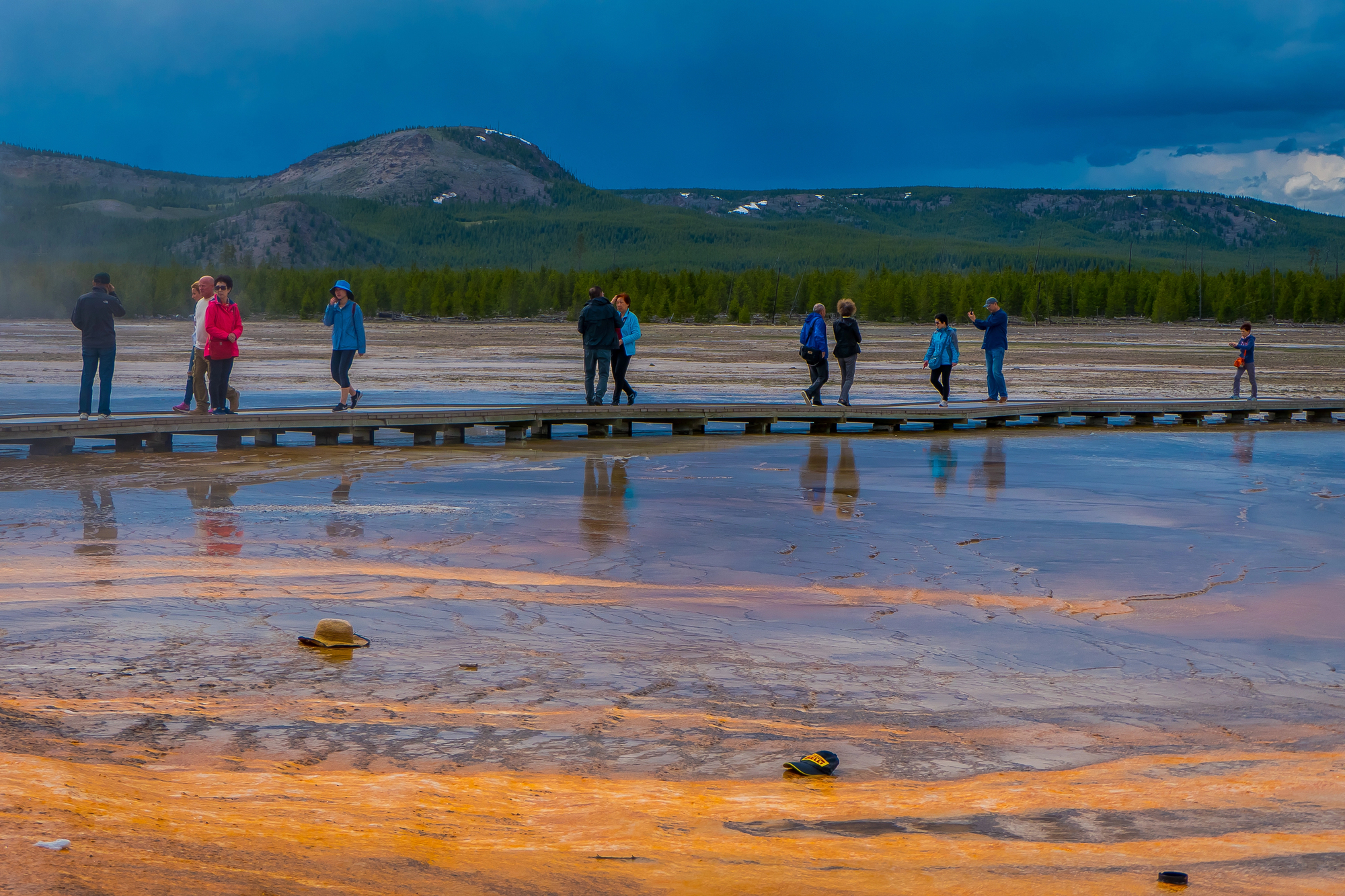
Boardwalks loop around the major geysers and hot springs, putting the most famous features within reach without rough terrain. Many of those paths are navigable in a wheelchair. Strollers roll along them with ease. The one rule every child needs to hear before stepping out of the car: Stay on the boardwalk. The crust beside it can be thin, and the water beneath it scalds.
When to Go
Late spring and early fall bring open roads, active wildlife, and fewer crowds than midsummer. Summer delivers the warmest days and the longest waits at the most famous geysers. In winter, most park roads close to regular cars. The snow and cold turns Yellowstone into a snowbound expedition better suited to older kids.
The Glowing Shoreline of Vaadhoo Island in the Maldives
It is close to midnight, and the beach is completely dark. Your son steps into the shallows, and blue sparks scatter around his ankles like someone spilled a jar of stars. Each wave lights up along its edge as it breaks, then fades, then lights again. He stops talking, which may be the most remarkable part.
The glow comes from tiny plankton that flash when the water moves. You can find bioluminescence in seas around the world. However, the Maldives, and Vaadhoo in the Raa Atoll most famously, have a reputation for carrying it right onto the sand. A toddler can watch from your shoulders. A grandmother can watch from a beach chair at the waterline.
When the Water Glows Brightest
Here is the honest part: No month guarantees the glow. Guides disagree on the best season, but most point to the warmer months from roughly June into November. This is when plankton run thickest. Darkness matters as much as the calendar. Moonless nights near the new moon give you the strongest show. I plan several nights on or near the island rather than betting everything on one evening.
Like other inhabited islands in the Maldives, Vaadhoo follows local customs. So, pack cover-ups for walks through the village.
Giant’s Causeway in Northern Ireland
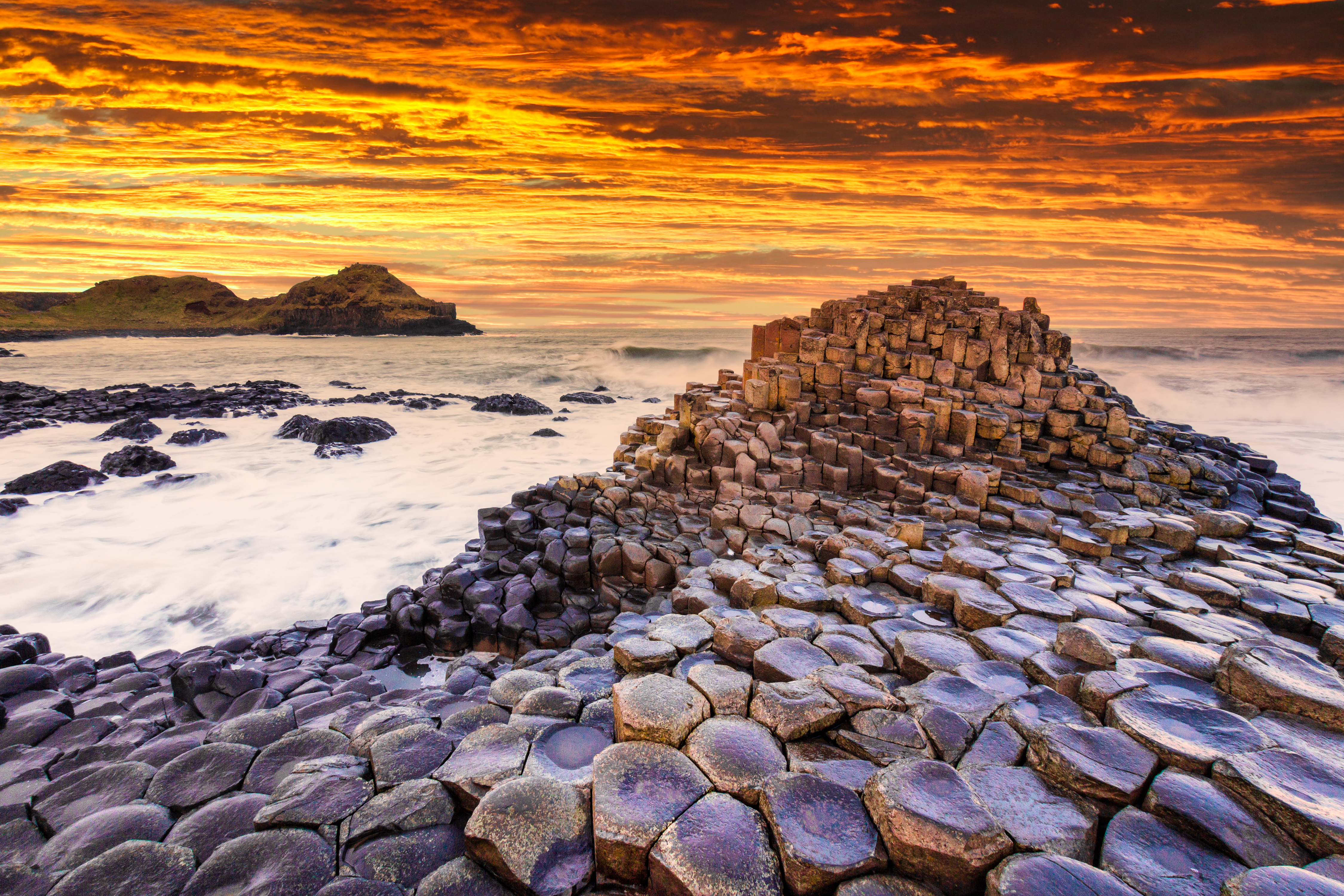
Ask a grandfather to tell you this one. Long ago, the legend goes, the giant Finn McCool tore chunks from the coast to build a path across the sea and face a rival in Scotland. What he left behind are roughly 40,000 interlocking basalt columns, stepping down into the Atlantic like a staircase built for someone enormous.
Geologists tell a different story. The columns formed when lava cooled and cracked about 60 million years ago. Many of them split into near-perfect hexagons. Kids love both versions. They hop from column to column, hunt for the formation known as the Giant’s Boot, and come home arguing about whether giants could be real.
Best Age and Walking Options
Any child steady on their feet can enjoy the stones, and younger ones can ride in a carrier. The shortest trail from the visitor centre reaches the main causeway in about 20 minutes. For anyone who would rather not walk it, an accessible shuttle bus runs between the visitor centre and the stones. Wheelchairs and all-terrain mobility scooters are available to borrow with visitor experience tickets.
Wet basalt turns slick, and sturdy shoes beat sandals here. Summer weekends and holidays bring the biggest crowds. However, arriving at opening or late in the afternoon gives you the columns with far fewer people on them.
The Wonders That Click Between Ages Six and Eleven
This is the age of Junior Ranger badges, endless questions, and the first trips kids retell on their own. They can walk farther, sit through a boat ride, and stay awake for something worth waiting for. These four reward that curiosity.
The Grand Canyon, Rim First
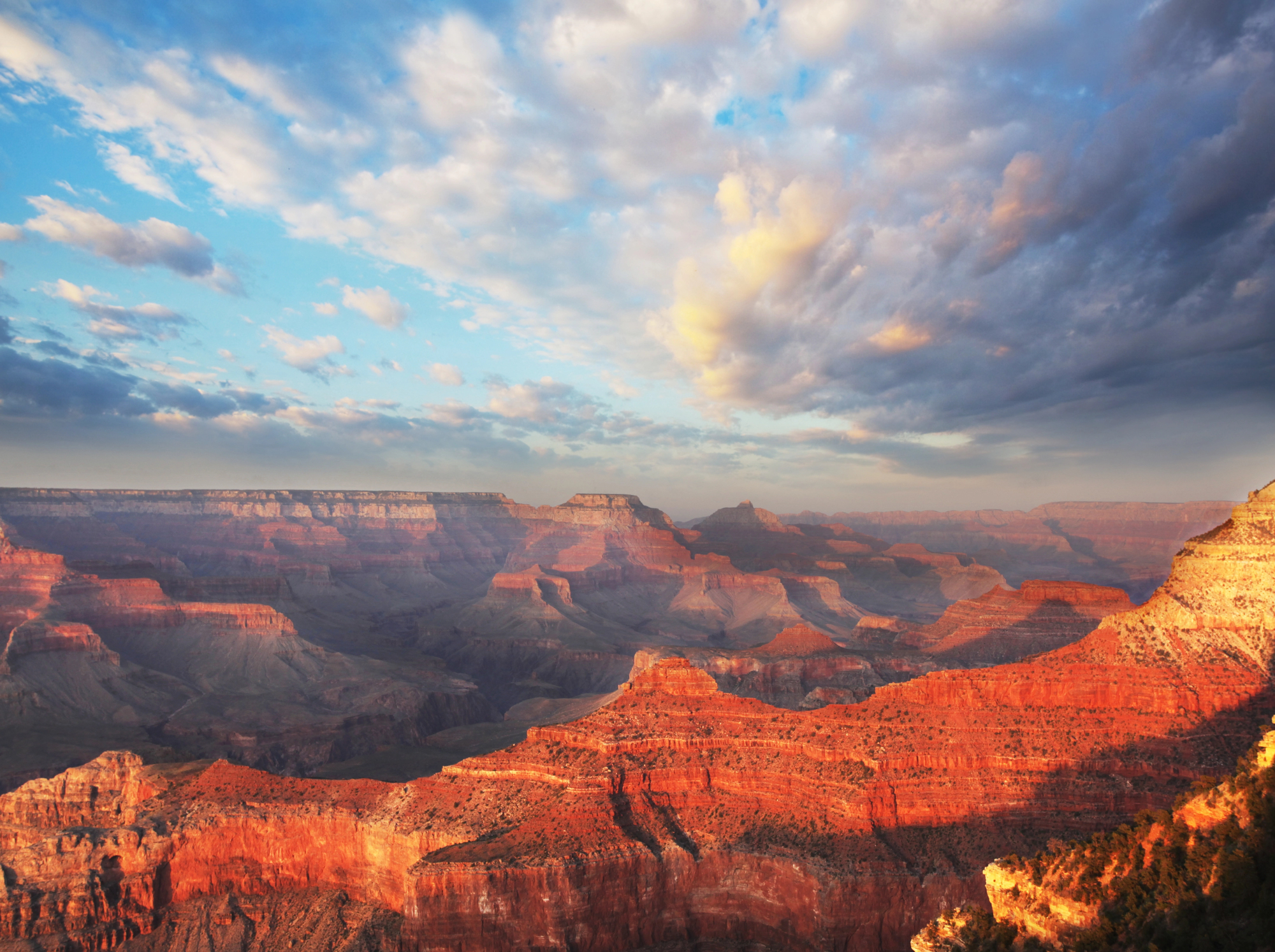
Stand at the rim at sunrise and the canyon changes color while you watch. Shadows slide off the far wall, red turns to orange turns to gold, and your nine-year-old leans against the railing and goes quiet. Then the questions start. How deep is it? How old is that layer? Could a river carve all of this?
Among the natural wonders to visit with kids in this age group, the canyon rewards curiosity best, because every rock layer is a chapter a child can read. Rangers turn those chapters into activity books and Junior Ranger badges. Overhead, keep watch for California condors. They are among the rarest birds in the world.
Best Time to Visit the Grand Canyon With Kids
Spring, from March through May, and fall, in September and October, bring the gentlest conditions for families. Spring daytime temperatures usually settle between the mid 50s and the low 70s, with daylight lasting into early evening.
Summer brings heat and crowds at the main overlooks. A sunrise or sunset visit keeps the day comfortable. One family rule worth adopting: Leave the phones in the car for the first look.
Planning National Park Vacations With Grandparents
The Grand Canyon may be the easiest option on this list for national park vacations with grandparents. The Rim Trail follows the edge for miles on a largely paved path, and even a short stretch delivers constantly changing views. Free shuttles link the main viewpoints. Families with little ones or limited mobility can hop from overlook to overlook without a single hike. If someone in your group dreams of a mule ride, check the minimum age before you promise it to a younger grandchild.
Alaska’s Tidewater Glaciers
The sound comes first: A crack like a rifle shot, then a long groan, then thunder as a slab of ice the size of a building slides into the sea. Every head on deck turns at once. Your eight-year-old grabs the railing. A moment later the wave rocks the boat gently under your feet.
Glacier Bay, about 50 miles northwest of Juneau, protects a wilderness where glaciers cover more than a quarter of its 3.3 million acres. Families usually see it from the water, which makes it one of the easiest giant landscapes for three generations to share. Grandparents can watch from a warm window seat. Kids can stand at the rail in mittens, scanning for the spout of a humpback whale or a seal resting on floating ice.
Six to eleven is the sweet spot, because children this age can handle long days on the water and stay alert for wildlife. Summer is the season for this trip, when long daylight stretches the viewing well into the evening. Pack layers no matter the month, because the air off the ice stays cold even when the sun shines.
Puerto Princesa Underground River in the Philippines
The boat slides out of the sunlight and into the mountain. The air turns cool and damp. A single beam of light sweeps across the ceiling, catching stalactites shaped like candles, curtains, and creatures your kids will name before the guide does. Bats rustle overhead. It feels like a journey to the center of the Earth.
This river winds through limestone beneath the Saint Paul Mountain Range on the island of Palawan. It is a UNESCO World Heritage Site and one of the New 7 Wonders of Nature. The full river runs about 8.2 kilometers, with 4.3 kilometers navigable. Standard boat tours explore roughly the first 1.5 to 2 kilometers. It ranks among the more adventurous natural wonders to visit with kids, best for children old enough to sit still and quiet in the dark.
What Families Need to Know Before the Boat Ride
Entry runs on a strict no permit, no entry policy. Daily visitor numbers are capped. Each visitor registers individually, so have identification ready for everyone in your group. In peak season, permits can sell out days ahead. I secure them well before you land.
Heavy rain can close the river for safety. A flexible extra day protects the plan. One tip kids remember long after the trip: Keep your mouth closed when you look up at the bats.
Seeing the Northern Lights With Kids

Seeing the Northern Lights has long been one of my favorite natural wonders in the world. Watching a child see them for the first time may top even that. Picture midnight, snow squeaking under boots, hot chocolate steaming in mittened hands. A pale green ribbon appears over the trees, then brightens, then ripples like a curtain in a breeze. Someone gasps. Someone else starts crying, and it is usually a parent.
Alaska offers this show without a passport. Iceland, northern Norway, Finnish Lapland, and northern Sweden deliver it with snowy adventures by day. In Finland, an old tale says a fox sweeps its tail across the snow and throws sparks into the sky. Tell it in the dark while you wait.
Why the Next Two Winters Matter
The sun reached the most active phase of its roughly 11-year cycle in 2024, and aurora activity tends to peak a few years after that. A leading Norwegian solar physicist expects the next couple years to be excellent years for chasing the lights.
The season runs through the dark months, roughly September through March. The weeks around the spring and fall equinoxes often bring strong displays.
Clouds still decide most nights, and forecasts more than a few days out are rough guesses. That is why I build every aurora trip around several nights, never one.
Keeping Little Ones Awake, Warm, and Happy
Children around six and up handle the late nights and deep cold best. Base the trip in a town rather than a remote cabin, because the lights may not appear every night and kids need daytime fun of their own. Dog sledding, snowshoeing, and building snow caves fill the hours until dark. An afternoon nap, warm layers from head to toe, and a thermos of something sweet turn a midnight vigil into an adventure instead of a chore.
Wonders Worth Saving for Tweens and Teens
Some wonders ask for stamina, patience, and a tolerance for thin air or rough roads. Teenagers often love them most, because effort turns into bragging rights. Save these natural wonders to visit with kids until your youngest can carry a daypack, along with their own patience on a long travel day.
Racetrack Playa in Death Valley
The dry lakebed stretches flat and cracked, like a giant jigsaw puzzle baked in the sun. Scattered across it sit stones, some heavier than a grown man, each with a long trail carved behind it. Some trails curve. Some zigzag. Not a footprint or tire track leads to them. Your teenager will walk the length of one, crouch beside the rock at the end, and ask the obvious question: Who moved this?
For decades, nobody could say for sure. Then in 2014, researchers caught it happening. On rare winter days, a shallow layer of water freezes into thin sheets of ice. As the sun breaks that ice apart, light winds push the floating panels. The panels then shove the stones across the soft mud. Teens love a mystery with an ending, which makes this one of the great family adventure vacations in the US for older kids.
One rule matters here: Never walk on the playa when it is wet, and never drive on it. Footprints and tire tracks scar the surface for years.
The Road Is Part of the Adventure
Reaching the playa means about 27 miles of rough, washboard gravel on Racetrack Road, starting near Ubehebe Crater. Good tires, four-wheel drive, and high clearance are usually required. Standard rental cars often end the day with a flat.
There is no cell coverage out there, and summer heat in Death Valley can turn dangerous fast. I plan this one for the cooler months and check the park’s road status before every trip. Especially since flash floods have closed this road before.
Partway there, teens will spot Teakettle Junction. It is a signpost hung with kettles left by travelers over the years. It makes the perfect photo stop on the long drive in.
The Marble Caves of Patagonia

The Marble Caves of Patagonia, Chile. Turquoise colors and splendid shapes create imagery of unearthly beauty carved out by nature.
The boat eases toward the cliff, and the rock begins to swirl. Bands of white, gray, and blue marble curve overhead like frosting, polished smooth by thousands of years of waves. Sunlight bounces off the turquoise water and ripples across the cave ceilings, as if the stone itself were moving. Look up past the cliffs, and you may spot condors circling.
These caves sit on General Carrera Lake, near the small town of Puerto Río Tranquilo in Chile’s Aysén region. Tweens and teens get the most from this adventure. The cold water and long road days suit older kids. Teens can trade the boat for a guided kayak paddle right into the chambers.
Getting There Is Half the Story
The journey starts with a flight of about two hours from Santiago to Balmaceda, near the city of Coyhaique. From there, a drive of roughly 200 kilometers south on the Carretera Austral, partly on gravel, takes four to five hours. Then everyone climbs into a boat for the final stretch across the lake.
Wind and rain can cancel boat trips without warning. I always build in a backup morning. When you finally glide into those marble chambers, the long road in becomes part of the reward.
Caño Cristales, Colombia’s River of Five Colors
At first glance it looks like someone spilled paint into a jungle stream. Ribbons of crimson and magenta ripple beneath clear water, edged with yellow sand, green moss, and dark stone. The red comes from a water plant called Macarenia clavigera, which blushes brightest when the water level and sunlight line up perfectly.
The river runs through the Sierra de la Macarena region of central Colombia. Families base themselves in the town of La Macarena. Most travelers reach this area by air, because there is no lodging at the river itself. From town, reaching the trails takes a mix of boat, four-wheel-drive vehicle, and walking, often in steamy heat. That combination makes teens the right age for this trip.
Access is tightly controlled to protect the plants. Every visitor needs a permit. No one may enter the trails without a certified local guide.
Timing the Colors
The river opens only during its official season, which follows the rains. The visiting window usually runs from June into late November. September and October bring peak color. Outside the season the site closes completely, and authorities enforce it. Opening dates shift from year to year. I confirm them before anyone books a flight.
Salar de Uyuni, the World’s Largest Mirror
Imagine standing on the sky. A thin layer of rainwater covers the salt, the clouds below your feet match the clouds above your head, and the horizon disappears. Your teenager sets up a photo where her little brother appears to stand in the palm of her hand. They spend an hour on it, laughing the whole time.
Salar de Uyuni in southwestern Bolivia is the largest salt flat on Earth. In the rainy season it turns into a mirror. In the dry months it hardens into a blinding white floor cracked into honeycomb shapes, with an island of giant cacti rising from the middle. Near town, a train cemetery lets kids climb on rusting steam locomotives.
The mirror appears most reliably in January and February. The dry season, roughly May through October, opens the whole salt flat to exploring.
Altitude, Long Drives, and Why Twelve Plus Is the Sweet Spot
The salar sits at 3,656 meters, nearly 12,000 feet, and nearby routes climb toward 5,000 meters. Nights turn bitterly cold. Days involve long hours in a four-wheel-drive vehicle with no shops along the way. I find twelve and up the more comfortable fit for this adventure, because older kids handle altitude and long drives with more grace.
Ask your pediatrician about altitude before you go. Pack saline spray for the dry air that brings on nosebleeds. In the wettest months, parts of the salar flood and close, which is the trade you make for the mirror.
Planning a Natural Wonder Family Vacation
Nature-based family travel has gone mainstream. Demand means the most famous natural wonders to visit with kids now come with more crowds, more rules, and more planning than they did a few years ago.
What Changed at America’s Busiest National Parks
For summer 2026, Yosemite, Arches, Glacier, and Mount Rainier all dropped their timed-entry reservation systems. That sounds like good news, and in some ways it is. Without reservations, though, the parking lots and overlooks go to whoever arrives first. This favors visitors who can wake early and drive in the dark, leaving families with small children and older travelers at a disadvantage.
Some rules stayed. Glacier still requires an advance ticket for everyone age two and up to ride the free shuttle on Going-to-the-Sun Road. Rocky Mountain kept timed entry for now. Permits are still needed for popular spots like Angels Landing in Zion.
This is where a planner like me earns her keep. I plan for the quieter entrances, the dawn starts that work with nap schedules, and the rules for your exact travel dates, because they may change again in the future.
When Relatives from Overseas Join the Trip
Picture your sister-in-law flying in from London to join the Yellowstone trip. Since January 1, 2026, non-US residents aged 16 and older pay an added per-person fee, on top of the standard entrance fee, at 11 of the most visited national parks. The list includes the Grand Canyon, Yellowstone, Yosemite, Zion, Acadia, and Glacier.
Rangers now check identification at those entrances. US residents using an annual pass need proof of residency. A quick heads-up to visiting family avoids an awkward moment at the gate, and it can guide the itinerary toward parks outside that list.
How Far Ahead Should You Start Planning?
Earlier than feels necessary. Many families now handle the biggest summer national park tasks in March. They check campground releases, permit lotteries, and vehicle rules before booking a single flight. International wonders with seasonal permits, like Caño Cristales and the Underground River, reward even earlier planning. Aurora trips need flexibility more than speed, with enough nights built in to wait out the clouds.
Start the conversation around the kitchen table in winter, and the hardest decisions will be settled before spring arrives.
Check out these European wonders during your family vacation.
Let Your Kids Help Choose the Wonder
Your kids probably want a say, and most parents already give them one. Picture three photos spread across the kitchen table: A glowing beach, a geyser mid-eruption, and a canyon at sunrise. Your seven-year-old taps the beach and will not let go. That trip now belongs to her too.
Natural Wonders to Visit With Kids Who Want a Vote
Offer two or three choices, never all twelve. Pick wonders that already fit everyone’s ages and abilities, then let the kids decide among them. A short list keeps the choice exciting instead of overwhelming.
Next, give each child a job. One can learn three facts to share on arrival. Another can track the aurora forecast or keep the Junior Ranger booklet. A teenager can plan the photo stop. The natural wonders to visit with kids that matter most are the ones they helped pick, because those trips come home as their story, not only yours.
Are You Ready to Plan the Wonder Your Family Will Talk About for Years?
Years from now, your kids will tell the story of the night the water glowed, or the morning the ice thundered into the sea, or the canyon that turned gold while everyone stood still. You do not have to do all the planning to get there. Tell me who is coming, how old they are, and what makes each of them light up. I will match your family to the natural wonders to visit with kids that fit this season of your life.
Are you ready to start planning your family’s next natural wonder?
If you said yes, I would like to invite you to schedule a planning session with me by clicking here. Clicking the link will take you directly to my digital calendar to schedule a time that is convenient for you.
Not ready to book a family vacation? Sign up for my newsletter and receive all the travel information I share. This way, you will be more than ready when it is time to book that exciting family vacation in the future.

Tracy is the owner of Elite Travel Journeys, a luxury travel agency dedicated to crafting extraordinary, memory-making journeys for families, multigenerational groups, empty nesters, and solo female travelers. A proud military veteran and President of the Central PA Chapter of ASTA, Tracy brings both discipline and deep passion to everything she does. With a particular love for river cruising, especially Europe’s enchanting Christmas Markets, she has been turning travel dreams into life-changing experiences since 2014. Tracy believes that extraordinary travel doesn’t just take you somewhere new; it changes who you are.
Enter your Name and best Email Address to receive
On Your Next Family Vacation
We respect your privacy and will never share or sell your information.
3 Ways to See It All in Alaska


On Your Next Family Vacation
Click here for 10 Exciting Family Adventures
You Can Plan
NOW