
Street Food in Vietnam: A City-by-City Guide to the Country’s Most Unforgettable Flavors
Street food in Vietnam is not a meal. It is a moment. It is the kind of moment that stops you mid-bite and makes you look up, take a breath, and think, “I need to come back here.” The steam rising from a bowl of pho at sunrise. The crunch of a perfectly baked banh mi. The smell of charcoal and lemongrass drifting through a narrow alley while motorbikes weave past and vendors call out to passersby. Vietnam is one of those destinations that gets under your skin in the very best way. And food is almost always the reason why.
I have been guiding travelers to extraordinary destinations for over a decade, and Vietnam holds a very special place in my heart. Culture, history, and cuisine intertwine so deeply in Vietnam that you simply cannot understand one without experiencing the others. When my clients come home from Vietnam, they talk about the food first. Every single time.
This guide is for the traveler who does not want a sanitized, tourist-version experience. It is for the woman who has earned her vacations. The woman who wants to arrive somewhere and feel it fully. And the woman who trusts that every detail of her trip has been thoughtfully arranged so she can simply be present. This is your city-by-city roadmap to the most unforgettable flavors Vietnam has to offer.
Street Food in Vietnam: A City-by-City Guide to the Country’s Most Unforgettable Flavors
Why Street Food in Vietnam Is Unlike Anything Else in the World
Food as a Way of Life
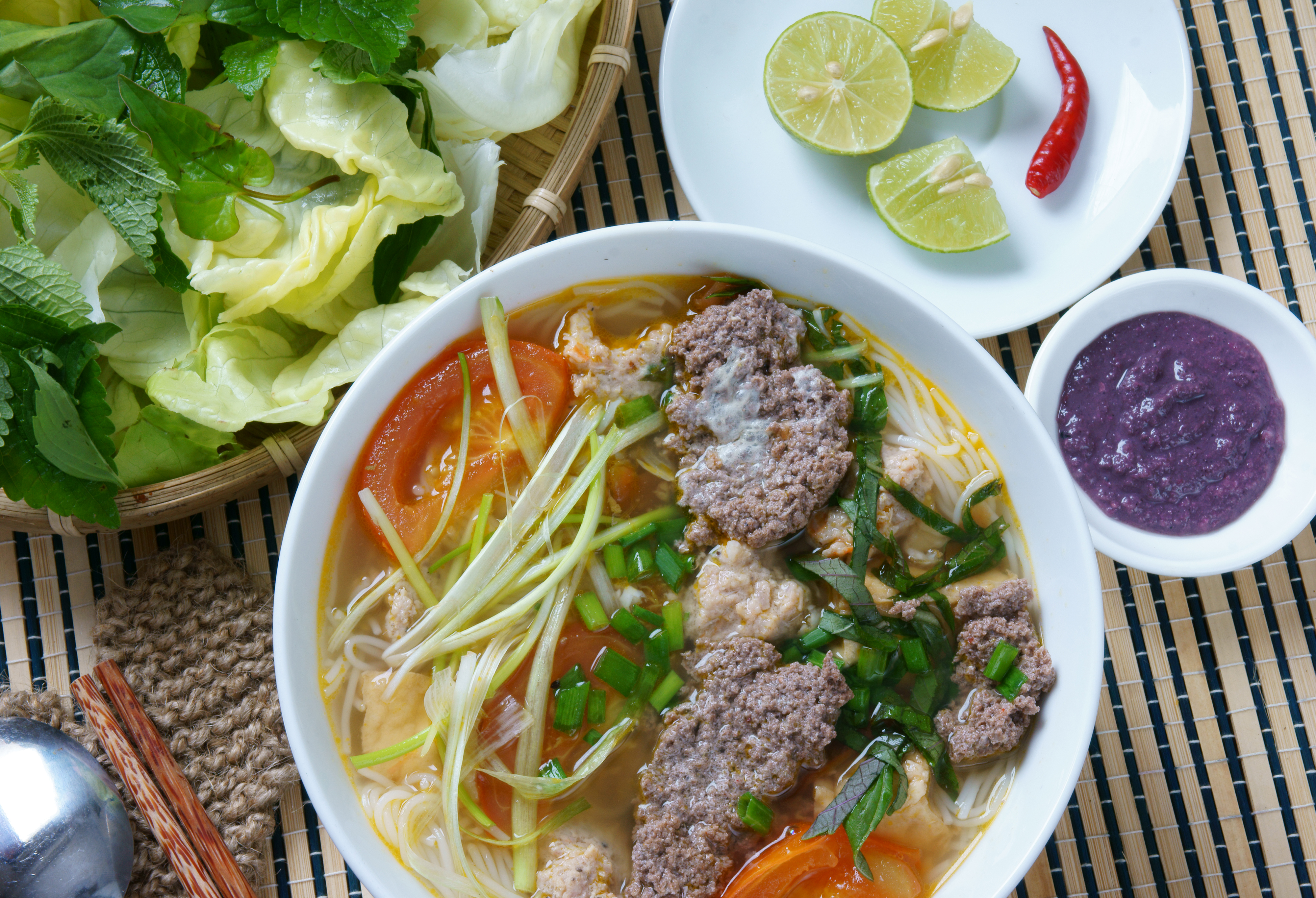
To understand Vietnam cuisine, you first must understand that food here is not incidental. It is not something you do between activities. In Vietnam, food is the activity. It is how families begin their mornings. How friends catch up in the afternoons. And how communities gather in the evenings.
The sidewalk is the dining room. The plastic stool is the chair. Generations of cooks have perfected the bowl sitting in front of you.
Street food in Vietnam carries the full weight of the country’s history, geography, and culture in every bite. The French colonial era gave Vietnam its baguettes, which became the foundation for banh mi. Trade routes through the ancient port city of Hoi An left behind culinary influences from China and Japan. The north, central, and southern regions each developed their own distinct flavors based on the ingredients available to them, the climate they lived in, and the cultural influences that shaped their communities.
When you sit down to a bowl of pho in Hanoi, you are not just eating noodle soup. Cooks have simmered, refined, and debated this dish for over a century. That is the kind of depth that makes authentic Vietnamese food unlike anything else in the world.
Check out my travel guide for Vietnam.
The Five Flavors and Why They Matter
Vietnamese cooks build every dish on a philosophy of balance. Every dish strives to hit all five fundamental flavor notes: Salty, sweet, sour, spicy, and umami. You will find fish sauce, fresh lime, chili, herbs, and fermented pastes working together in ways that seem impossibly harmonious. Nothing is overpowering. Nothing is one-note.
The result is food that feels both bold and light at the same time. This is part of why so many travelers find themselves craving it long after they return home.
Fresh herbs are not a garnish in street food in Vietnam. They are a central ingredient. Mint, cilantro, Thai basil, and perilla show up at nearly every table. The expectation is that you will customize your dish with them. That interactive, personal quality of the dining experience is something my clients consistently mention as one of their favorite surprises of the trip.
One of my clients, a CEO who travels extensively for business, told me that Vietnam was the first time in years she had sat down to a meal without looking at her phone. “There was so much happening around me,” she said, “and the food was so good that I just forgot. I was completely there.” That is the power of Vietnam food culture and traditions at work.
What to Eat in Vietnam: The Dishes You Simply Cannot Skip
Vietnamese Pho: The Dish That Started It All
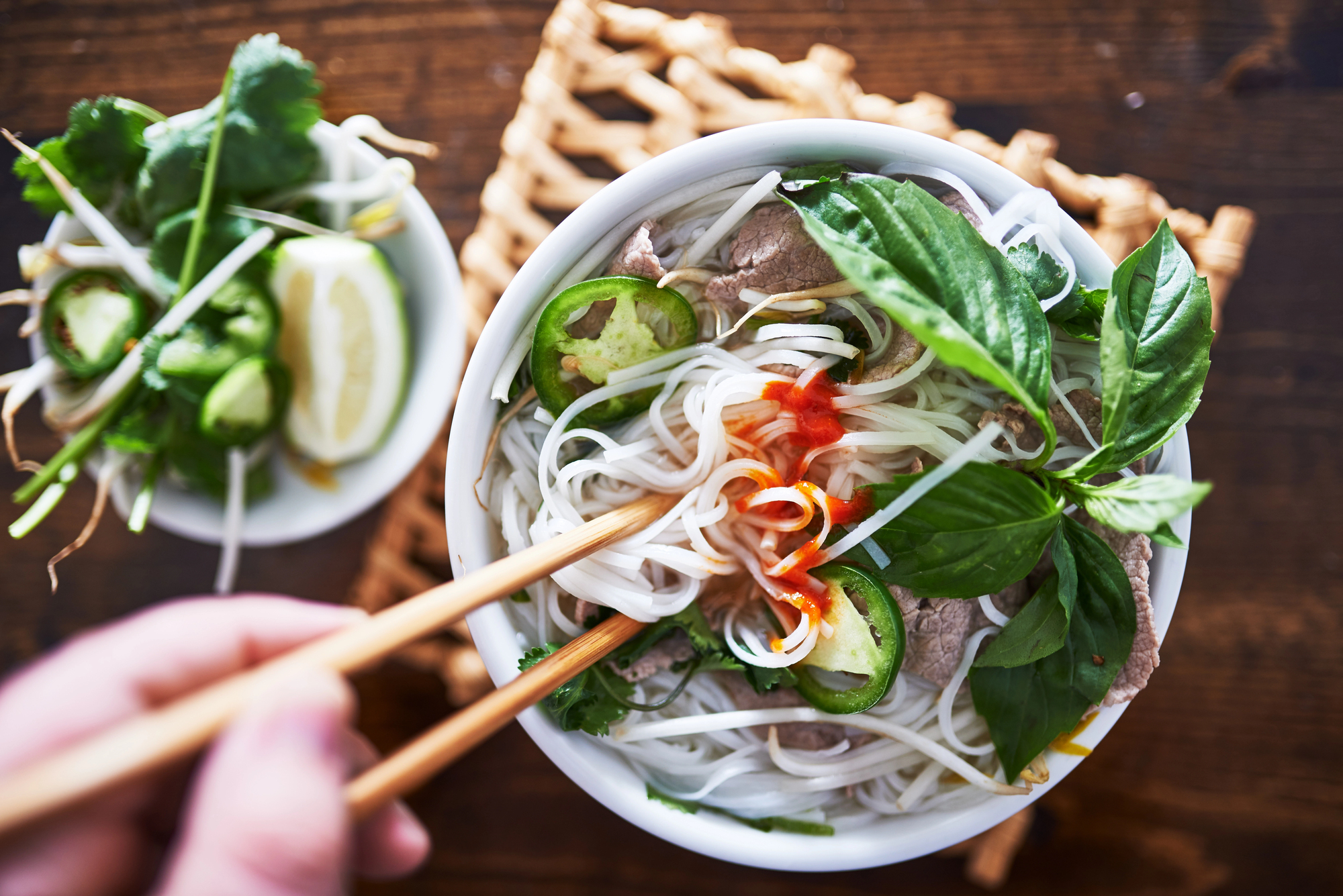
If there is one dish that defines the Vietnam culinary experience for most travelers, it is pho. This iconic noodle soup is deceptively simple in appearance and endlessly complex in flavor. A rich, clear broth, simmered for hours with bones, charred ginger, star anise, cinnamon, and cloves. It is then poured over silky rice noodles and topped with thin slices of beef or chicken, fresh herbs, bean sprouts, lime, and chili.
Vietnamese pho is a northern dish by origin. It was born in Hanoi in the early twentieth century. The southern version, most commonly found in Ho Chi Minh City, tends to be slightly sweeter and is served with a wider array of accompaniments. Debating which version is better is a beloved national pastime. I encourage my clients to try both and form their own opinions.
Pho is a breakfast food in Vietnam. The locals eat it early. And the broth is at its best first thing in the morning when the pot has been going all night. If your instinct is to sleep in and skip it, I am going to gently encourage you to reconsider. A bowl of pho at sunrise in Hanoi is one of those travel memories that stays with you for life.
Banh Mi Vietnam: A French Vietnamese Love Story
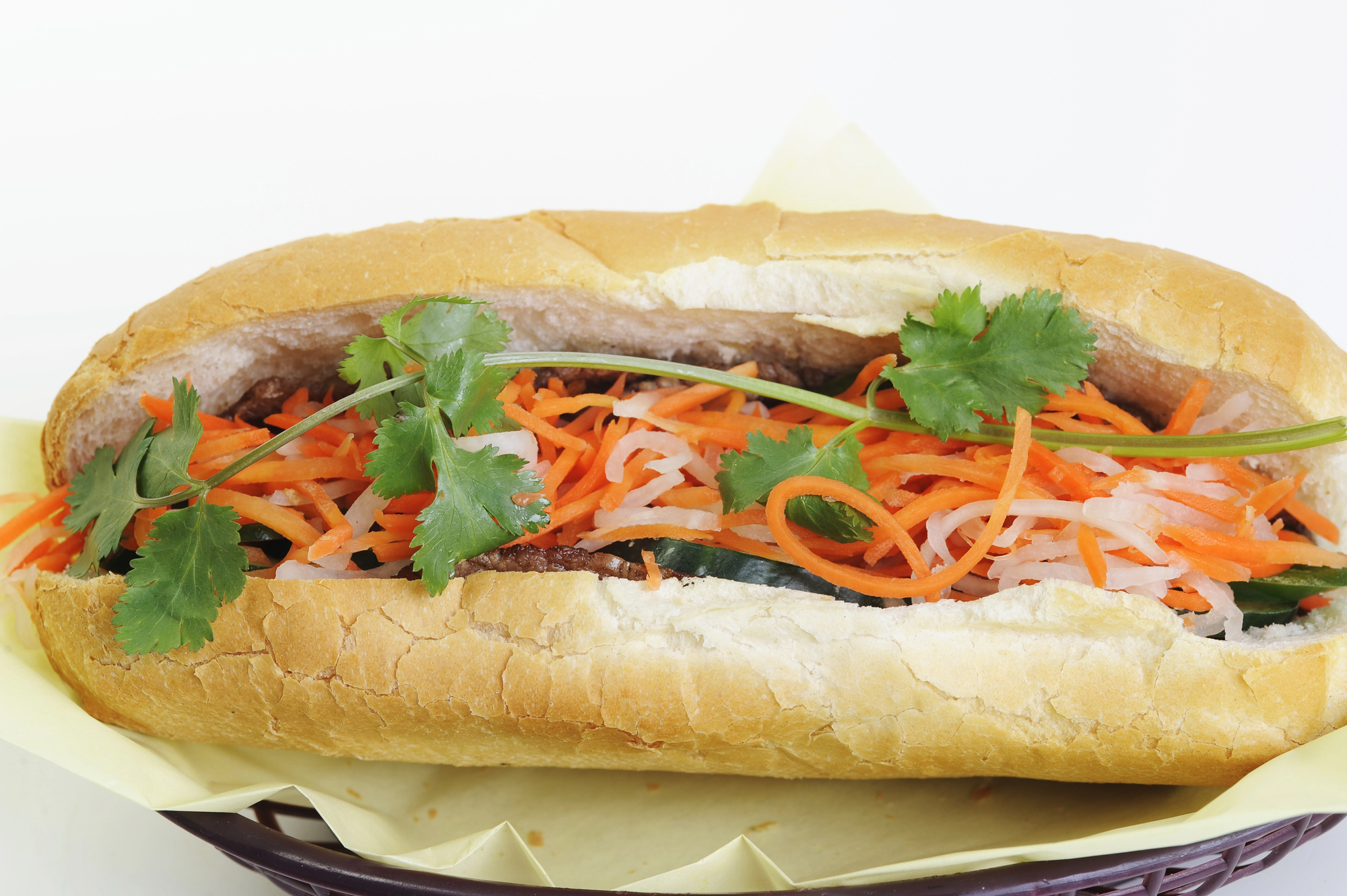
Banh mi is one of the great culinary love stories in history. When the French colonized Vietnam in the nineteenth century, they brought their baguettes. The Vietnamese took that baguette and made it their own by using rice flour to create a lighter, crispier crust. They then filled it with ingredients that had nothing to do with France. Pate, pickled daikon and carrot, fresh cucumber, cilantro, sliced chili, and various combinations of grilled pork, pork belly, Vietnamese sausage, or fried eggs.
The result is one of the most satisfying sandwiches on the planet. It is crunchy, tangy, savory, herby, and a little spicy all at once. And it costs almost nothing, which is part of what makes it so beloved. You will find banh mi carts and small storefronts on nearly every corner in every city in Vietnam. The quality is consistently extraordinary.
Banh mi Vietnam is the perfect introduction to the way Vietnamese food thinks. It is proof that this cuisine does not just absorb outside influences. It elevates them.
Goi Cuon: Fresh Spring Rolls Done Right
Most people have encountered spring rolls in Vietnamese restaurants at home and thought they were good. Then they try goi cuon in Vietnam and realize what they had before was a pale imitation.
Fresh spring rolls, called goi cuon, are made with translucent rice paper wrapped around vermicelli noodles, fresh shrimp or pork, mint, lettuce, and sometimes mango or herbs specific to the region. They are served with peanut dipping sauce or a lighter fish sauce-based dip. Goi cuon are light, fresh, and deeply flavorful without being heavy. Basically, they are the kind of food you eat and immediately want more of.
Goi cuon represent everything that makes authentic Vietnamese food so compelling. The emphasis on freshness, the interplay of textures, the brightness of the herbs, and the depth of the dipping sauce. They are also a wonderful option for travelers who want to experience street food in Vietnam but prefer something lighter.
Must-Try Dishes in Vietnam Beyond the Classics
While pho and banh mi tend to dominate the conversation, Vietnam’s food landscape is vast and endlessly rewarding. Here are several dishes that belong on every serious traveler’s list.
Bun Cha is a Hanoi specialty and one of the most beloved dishes in northern Vietnam. Grilled pork patties and sliced pork belly are served in a savory, slightly sweet broth alongside a plate of fresh rice noodles and an abundance of herbs. You assemble each bite yourself. This makes it a wonderfully interactive meal.
Banh Xeo is a sizzling Vietnamese crepe made from rice flour, turmeric, and coconut milk. It is filled with shrimp, pork, and bean sprouts, then folded in half and served with lettuce leaves and dipping sauce. The name translates to “sizzling cake”. That is exactly the sound it makes when the batter hits the hot pan. You wrap pieces of it in the lettuce leaves with fresh herbs, dip it in sauce, and eat it with your hands. It is joyful, messy, and absolutely delicious.
Che is Vietnam’s beloved sweet dessert soup. It can be found in seemingly infinite variations depending on the region and the season. Che can include coconut milk, sweetened mung beans, tapioca pearls, sticky rice, tropical fruits, and colorful jellies. It is the kind of dish that children and grandparents both love. This makes it a wonderful choice for families traveling together.
Check out more foods you should try during your family vacation in Vietnam.
Vietnamese Coffee: The Drink That Will Ruin You for Everything Else
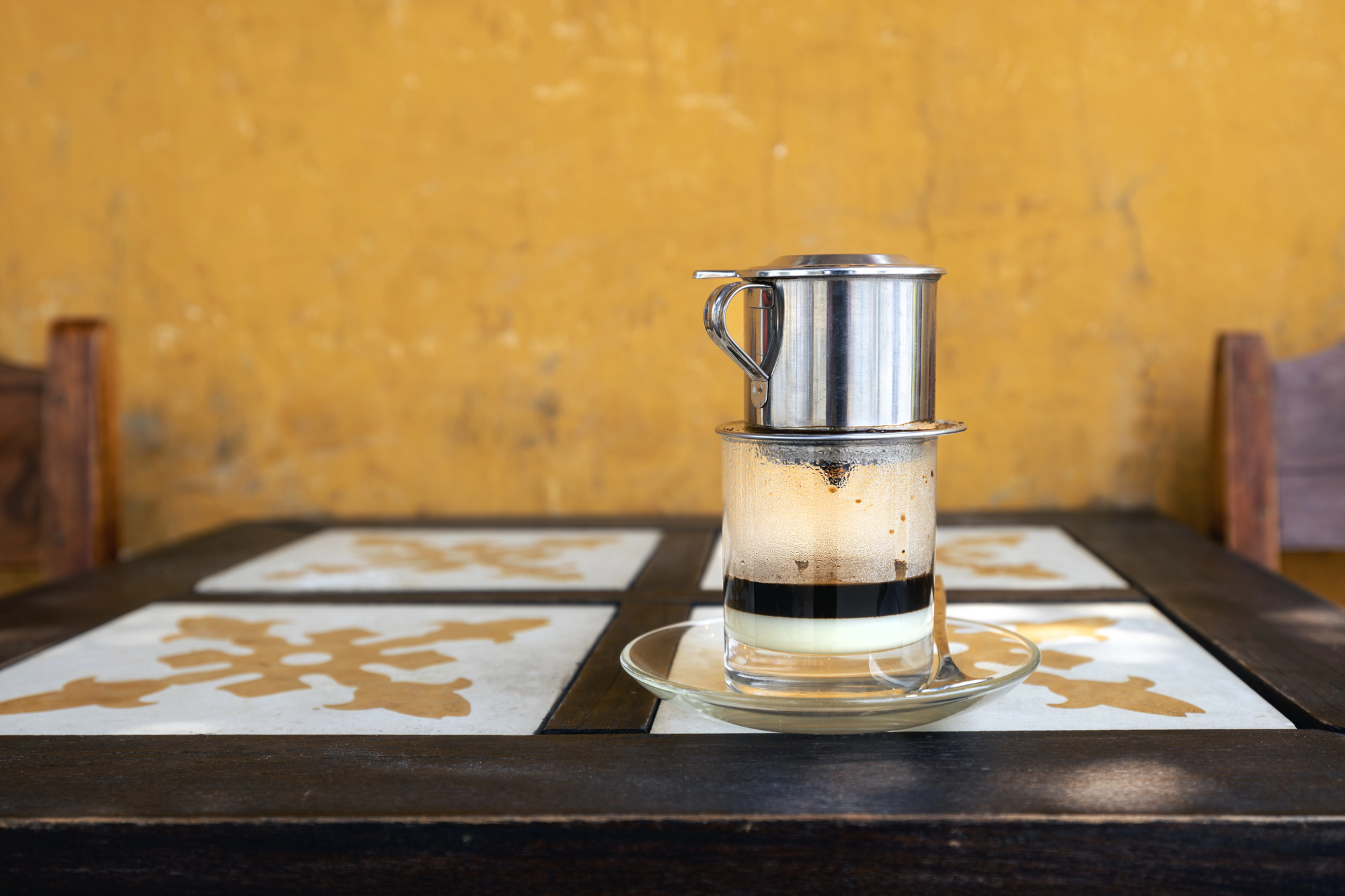
I tell every client heading to Vietnam the same thing: Prepare to have your relationship with coffee permanently altered.
Vietnamese coffee is made with dark roast robusta beans. These coffee beans are stronger and more intensely flavored than the arabica beans most Western coffee drinkers are accustomed to. It is brewed slowly through a small metal drip filter called a phin. And it produces a thick, rich, almost syrupy concentrate. That concentrate is poured over ice with sweetened condensed milk for ca phe sua da, the classic iced Vietnamese coffee that is simultaneously indulgent and refreshing.
Then there is egg coffee, ca phe trung. This type of coffee originated in Hanoi and has become one of the most talked-about drinks in Southeast Asia. A creamy, whipped mixture of egg yolks and condensed milk is spooned over hot coffee. This creates something that tastes remarkably like a liquid tiramisu. It is extraordinary, and it is an experience you will not find authentically replicated anywhere else in the world.
Vietnamese coffee is not just a beverage. It is a ritual. Locals linger over their coffee for an hour or more, people-watching, talking, and simply existing. It is a beautiful reminder to slow down, which is something many of my clients say they needed more than they realized.
Street Food in Vietnam, City by City
Vietnam stretches over a thousand miles from north to south, and the food changes dramatically as you travel through it. The north tends toward cleaner, more subtle flavors. The central region is bold and spicy. The south is sweeter and more abundant. Understanding these regional differences is part of what makes a Vietnam food travel guide so essential before you go.
Hanoi Street Food: The North’s Bold and Soulful Flavors
Hanoi is where Vietnamese street food culture feels most ancient and most alive at the same time. The Old Quarter is a maze of narrow streets. Each one is historically dedicated to a specific trade. The food vendors here have been feeding the city for generations.
The energy is intense, the flavors are direct, and the experience of eating on a tiny plastic stool while the city rushes past you is one that travelers consistently describe as one of the highlights of their entire trip.
What to eat in Hanoi:
Pho bo (beef pho) is the undisputed king of the Hanoi street food scene. The northern version is more restrained and savory than its southern counterpart. The broth is clear and deeply fragrant. The accompaniments are simpler. It is proof that restraint can be its own kind of perfection.
Bun cha is the other dish Hanoi claims as its own, and rightly so. If you have any doubt about how seriously the Vietnamese take this dish, consider that it was the meal a former American president chose to eat when he visited Hanoi. The combination of grilled pork, cold noodles, fresh herbs, and dipping broth is nothing short of revelatory.
Ca phe trung, egg coffee, was born in Hanoi in the 1940s when milk was scarce. At that time, a bartender at a legendary hotel substituted whipped egg yolks and condensed milk. The drink has been a Hanoi institution ever since. Experiencing it in the city where it was created is something special.
Hanoi street food rewards the traveler who wanders slowly, follows their nose, and is willing to sit down anywhere that looks busy and well-loved. The best stalls are the ones with the longest lines of locals.
Hoi An Food Guide: Where Every Bite Tells a Story
If Hanoi is Vietnam’s soul, Hoi An is its heart. This UNESCO World Heritage site on the central coast is one of the most beautiful towns in Southeast Asia. Its food scene is arguably the most distinctive in the entire country. Because Hoi An was a major international trading port from the fifteenth through the nineteenth centuries, its cuisine absorbed influences from Chinese merchants, Japanese traders, and French colonizers. This created a culinary identity that exists nowhere else on earth.
Best Dishes in Hoi An:
Cao lau is the dish that Hoi An claims as its most iconic. The mythology surrounding it is part of its appeal. The thick, chewy noodles used in cao lau are said to require water drawn from a specific ancient well within the city. And the ash used in their preparation comes from wood found only on a nearby island. Whether or not you believe the legend, the result is extraordinary. A bowl of smoky, savory noodles topped with sliced pork, crispy croutons, fresh greens, and a rich broth that is unlike anything you will eat anywhere else.
White rose dumplings, banh bao vac, are another Hoi An original. Delicate, translucent rice paper dumplings are shaped to resemble white roses and filled with seasoned shrimp. They are served with a tangy dipping sauce and are as beautiful to look at as they are to eat. The recipe is famously guarded by a single family who has been making them for generations.
Mi Quang is a noodle dish that showcases the central region’s love of bold flavor. Wide, turmeric-tinted noodles are served with a small amount of rich broth, shrimp, pork, peanuts, and crispy rice crackers. It is hearty, complex, and completely addictive.
Hoi An’s Ancient Town also comes alive at night with lanterns strung across every alleyway. Food vendors line the streets along the river. Walking through it with a bowl of something delicious in hand, surrounded by the glow of hundreds of silk lanterns, is one of those travel moments that my clients try to describe when they get home and ultimately give up, saying, “You just have to go.”
A Client’s Personal Dining Experience in Hoi An
One of my clients, a woman who had traveled extensively throughout Europe and Asia, told me that Hoi An was the first place in years that made her feel completely unhurried. “We had nowhere to be,” she said. “We just wandered and ate and wandered some more. My mother-in-law, who is in her seventies, said it was the best day of the trip.” That is what a multigenerational food experience in Vietnam can look like when it is planned well.
Learn about more towns in Vietnam before planning your next vacation.
Ho Chi Minh City Street Food: Saigon’s Electric Culinary Scene
Ho Chi Minh City, still called Saigon by virtually everyone who lives there, is a city that operates at full volume from early morning until well past midnight. The energy is electric, the streets are perpetually in motion, and the food is everywhere. This is the culinary capital of southern Vietnam. The flavors here reflect the south’s warmer climate, its access to the Mekong Delta’s abundance, and its history as a cosmopolitan trading hub.
What Makes Ho Chi Minh City Street Food Distinctive
The southern palate runs sweeter than the north, and you will notice it immediately. Broths are richer and slightly sweeter. Dishes are served with more accompaniments. The variety on any given street corner is staggering.
Banh mi reaches its full expression in Ho Chi Minh City, where the sandwiches are loaded with extraordinary generosity. The fillings are diverse and the quality is consistently high throughout the city.
Hu tieu is a southern noodle soup that deserves far more international attention than it receives. Made with clear pork and dried seafood broth, it is served with rice noodles and an array of toppings including pork, shrimp, quail eggs, and fresh herbs. It is lighter than pho but no less satisfying.
The night market scene in Ho Chi Minh City is one of the great food experiences in Southeast Asia. As the sun goes down, the sidewalks transform. Vendors set up their stations. The smell of charcoal and chili fills the air. And the city comes alive in a way that feels like a celebration every single night. Every traveler who wants to experience Vietnam’s food culture at its most vibrant and sensory needs to see Saigon after dark.
Bun thit nuong, grilled pork vermicelli, is a Ho Chi Minh City staple that showcases everything the south does best. Thin rice noodles are served at room temperature with slices of chargrilled pork, crispy spring rolls, crushed peanuts, pickled vegetables, fresh herbs, and a sweet and savory dipping sauce. It is assembled at the table and eaten with chopsticks.
How to Eat Like a Local in Vietnam
Timing, Rhythm, and the Art of the Meal
One of the most common questions I hear from clients preparing for Vietnam is, “How do I actually navigate the food scene once I am there?” The answer starts with understanding how the Vietnamese relationship with food is structured throughout the day.
Breakfast is taken seriously and eaten early. Often before 8 a.m. This is when the best pho, bun bo hue, and banh mi are available. Fresh and at their peak.
Lunch is eaten between 11 a.m. and 1 p.m. It is a full, proper meal, not a sandwich at a desk. You will see long lines at street food vendors in Vietnam during the lunch hour.
Dinner begins earlier than most Western travelers expect, often around 5:30 or 6 p.m. The best street food vendors frequently sell out of their signature dishes well before 8 p.m.
The lesson here is simple: Eat when the locals eat and eat where the locals eat. Look for stalls with high turnover, visible cooking, and a crowd of people who live and work nearby. Those are the places where the food is freshest, the technique is sharpest, and the experience is most authentic.
The Art of Customization
Vietnamese food is interactive in a way that many travelers find surprising and delightful. At most street food stalls, vendors place a plate of fresh herbs, lime wedges, sliced chili, bean sprouts, and various condiments right in front of you. You will then season your dish according to your own preferences. Fish sauce, chili sauce, hoisin, and vinegared garlic are standard additions. The expectation is that you will experiment.
Embrace the array of options in front of you rather than letting it overwhelm you. Ask your guide what to add. Watch what the person next to you does. Taste as you go. This is how locals have been eating for generations. It is one of the most engaging and personal aspects of the Vietnam culinary experience.
Vietnam Food Tour vs. Exploring on Your Own
There is real value in wandering and discovering things independently. I always encourage my clients to leave space in their itineraries for spontaneous food moments. However, the difference between a guided Vietnam food tour and going it alone is significant. Especially for first-time visitors.
A skilled local guide knows which vendors have been operating for decades. They know which stalls open only on certain days. They speak the language, understand the etiquette, and can translate not just the menu but the story behind the dish. And they take you places you would never find on your own and keep you from wasting time on tourist-facing options that do not represent the best the city has to offer.
When I plan a Vietnam itinerary for my clients, curated food experiences are always a core component, not an afterthought. Because food is not a sidebar to the Vietnam experience. It is the experience.
Vietnamese Street Food Safety Tips for Travelers
This is the section I know you have been waiting for, because it is almost always the first question I get from clients who are excited about Vietnam but a little nervous about eating from street vendors. Let me put your mind at ease.
What to Look For
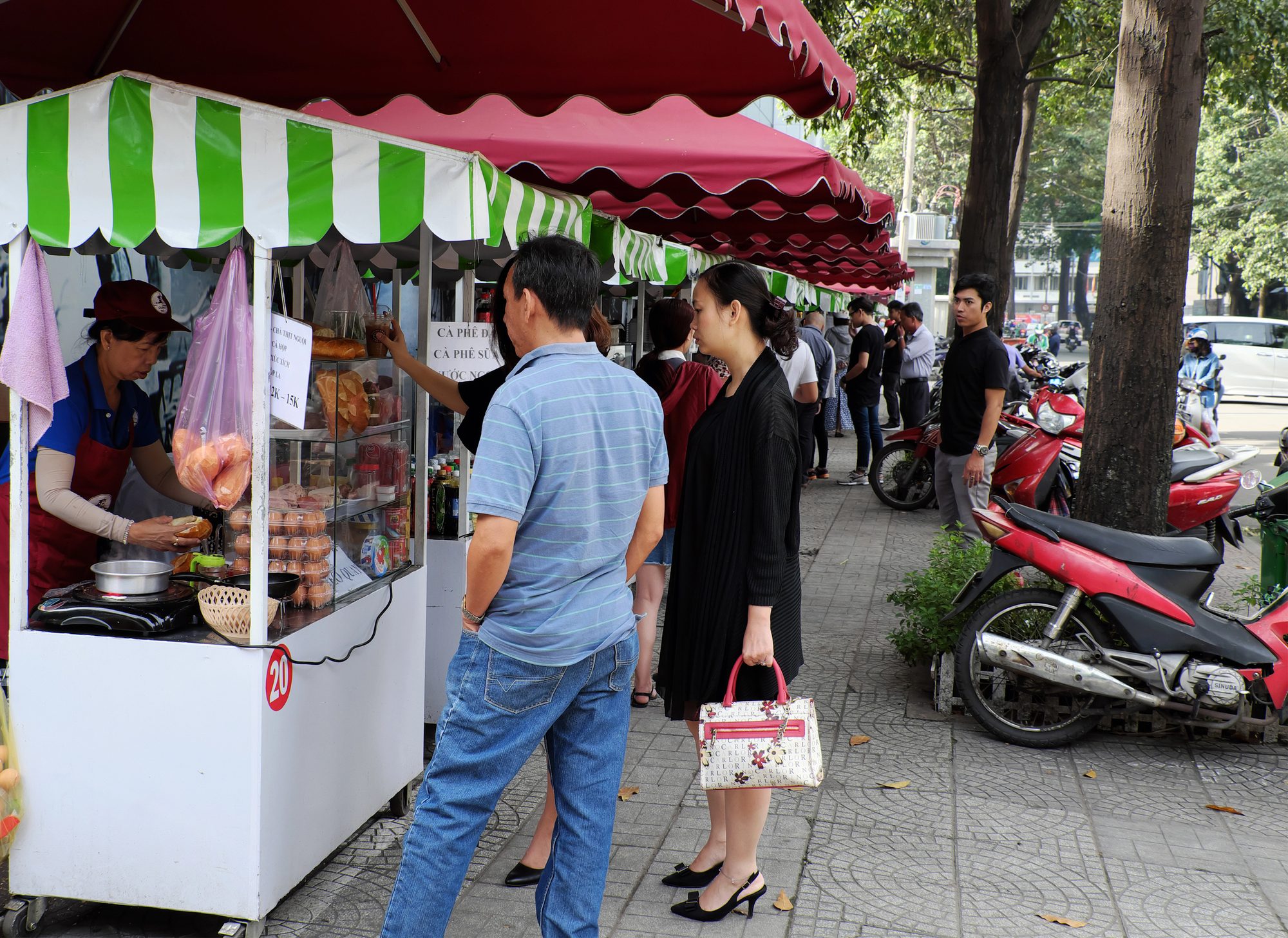
The best indicator of a safe, high-quality street food vendor is volume. If a stall is busy with locals who eat there regularly, the food is almost certainly fresh, properly prepared, and delicious. High turnover means ingredients are not sitting out for hours. It means the vendor’s livelihood depends on not making people sick. The food is cooked to order over high heat.
Conversely, stalls with very few customers, pre-cooked food sitting uncovered, or questionable hygiene practices are easy to spot once you know what you are looking for. Your guide will steer you well, but your instincts are also a reliable compass.
What to Drink
This is the most important practical tip I can give you for Vietnam: Drink bottled or filtered water exclusively. And be mindful of ice. Established restaurants and reputable vendors typically make their ice from purified water, so you can drink it with complete confidence. On the street, it is worth checking with your guide before accepting drinks with ice from unknown sources.
Vietnamese coffee and tea arrive piping hot. They are always safe. Fresh coconut water, drunk directly from the coconut, is safe and extraordinarily refreshing in the heat.
How I Take Care of This for My Clients
When I plan a Vietnam trip, I weave street food safety into every recommendation I make. I work with trusted local operators who know their vendors, their sourcing, and their standards. My clients do not spend their vacation wondering whether the food they are about to eat is going to affect their trip. They simply eat, enjoy, and trust that everything has been vetted.
That peace of mind is not a small thing. For the woman who has a packed professional life and has set aside precious time to travel with her family or her closest friends, the last thing she needs is a preventable problem derailing her trip. Knowing that someone has handled every detail, so she does not have to is exactly what working with a luxury travel advisor provides.
The Best Street Food Experiences in Vietnam for Luxury Travelers
Beyond the Bowl: Elevated Culinary Experiences
Street food in Vietnam is inherently democratic. It is available to everyone, at every price point, on every corner. But the way you experience it can be as elevated and curated as you choose.
My clients who want the best street food experiences in Vietnam while also enjoying the refinement they are accustomed to will find extraordinary options waiting for them. Private market tours with local chefs who walk you through every ingredient before taking you into a home kitchen to cook together.
Curated tasting journeys through the back streets of Hoi An with a food historian who can explain the cultural significance of every dish. Sunrise pho experiences followed by private boat trips through Ha Long Bay. Sunset cocktails overlooking the lantern-lit rooftops of the Old Quarter after an afternoon of eating your way through its alleys.
The luxury food experience Vietnam offers is not about white tablecloths and tasting menus, though those exist too. It is about depth. It is about access. And it is about having someone in your corner who knows how to give you the real thing beautifully arranged and entirely without friction.
Family Travel Vietnam Food Experiences
Vietnam is one of my favorite destinations for multigenerational travel. And the food is a significant reason why. The cuisine is naturally varied enough that there is genuinely something for every age and every palate.
Children tend to love the interactive quality of Vietnamese meals. The spring rolls they can assemble themselves. The sweet desserts and fresh fruit. And the novelty of eating on tiny stools surrounded by the hum of the city.
Grandparents who travel with their adult children and grandchildren to Vietnam consistently tell me that the shared meals were the highlight of the trip. There is something about sitting around a spread of dishes, passing plates, tasting each other’s food, and laughing together over a bowl of something extraordinary that strips away the noise of everyday life and puts everyone exactly where they need to be. Together, fully present, making memories.
I planned a three-week Vietnam trip for a family of nine, spanning three generations, two years ago. When the grandmother called me after they returned, she said, “I have traveled my whole life, and I have never felt closer to my family than I did at that dinner table in Hoi An.” That is what the right trip can do. That is what I work every day to create for my clients.
More yummy street foods to try during family vacations.
Cooking Classes and Cultural Immersion Food Travel
One of the most meaningful ways to engage with Vietnamese food culture is to learn to make it yourself. Cooking classes in Vietnam are not afterthoughts or tourist traps. Especially when they are chosen with culture in mind.
The best ones take you to a local market first thing in the morning. Your chef guides you through the ingredients and teaches you how to select the freshest herbs. Then they explain the philosophy behind the cuisine. Afterwards, you cook together, eat together, and leave with recipes, techniques, and stories that will stay with you far longer than any souvenir.
Cultural immersion food travel of this kind is something I integrate into Vietnam itineraries whenever it fits the group’s interests, because it transforms a meal into an education and a shared experience into a lasting bond. For families, friend groups, and couples alike, a cooking class in Vietnam is one of those experiences that the whole group talks about for years.
Vietnam Vacation Planning: How to Make Food the Heart of Your Trip
Building Your Itinerary Around the Flavors
The most common mistake I see travelers make when planning a Vietnam trip is treating the food as something that will just happen on its own. They plan the temples, the boat tours, the overnight train journeys, and assume the food will take care of itself. And while Vietnam’s food scene is so extraordinary that even the most passive approach will yield memorable meals, intentional planning elevates the entire experience.
When I build a Vietnam itinerary for my clients, food is a foundational consideration from the very beginning. Which cities will you visit? How long will you spend in each one? Which food experiences are absolute priorities, and which can be flexible? Is there anyone in the group with dietary restrictions or strong preferences? These questions shape everything, not just where you eat, but how your entire itinerary comes together.
The Best Time to Visit for Food Experiences
Vietnam is a year-round destination. But the timing of your visit can affect which food experiences are available to you. The central region, including Hoi An, has a rainy season from October through December that can impact outdoor dining. The north is coolest and most pleasant for walking and eating from October through April. The south is warm and accessible year-round, with the dry season running from December through April being the most comfortable for exploration.
Food festivals and markets are a wonderful reason to time your visit strategically. The Tet holiday, Vietnam’s Lunar New Year celebration, typically falls in late January or early February. This time of year, brings extraordinary regional food traditions to the surface across the entire country. Traveling during or just before Tet offers a rare window into Vietnamese food culture at its most celebratory and communal.
Why You Should Not Plan This Trip Alone
I have been planning travel for over a decade, and I can tell you with complete confidence that Vietnam is one of the destinations where the value of working with an expert is most immediately apparent. The language barrier, the regional complexity, the sheer volume of options, the logistics of moving between cities efficiently while leaving room for spontaneous discovery, and the importance of getting the food experiences right all of it requires knowledge that takes years to accumulate.
My clients come to me because they do not have time to spend months researching a destination they have never been to. They want someone who has been there, who knows the people on the ground, who understands what a discerning traveler actually needs versus what the travel brochures promise. They want their vacation to be everything they imagined it would be, without the stress of figuring it out themselves.
Vietnam vacation planning done well is a gift you give yourself and everyone traveling with you. The details matter. The connections matter. Expertise matters.
If Vietnam, and its street food, has been on your list, let’s talk. Allow me to take you through Vietnam the way it deserves to be experienced, one extraordinary bowl, one lantern-lit alleyway, one unforgettable meal at a time.
One Last Bite
Street food in Vietnam is, at its core, an act of generosity. Every vendor who has spent decades perfecting a single dish, every family recipe passed down through generations, every bowl served with pride to a stranger from the other side of the world is an offering. It is an invitation to slow down, pay attention, and be exactly where you are.
My clients who travel to Vietnam do not come home talking about the number of miles they covered or the number of sites they checked off a list. They come home talking about the woman who laughed when they fumbled with their chopsticks and then gently showed them how to hold them. They talk about the pho they ate on a plastic stool at 6 a.m. with the whole city waking up around them. Conversations revolve around the cooking class where their mother-in-law discovered she had a talent for making spring rolls and everyone applauded.
They come home having made memories with the people they love most. And that, at the end of the day, is the only thing any of us are really after.
So, are you ready to start planning a trip to Vietnam to experience the street food?
If you said yes, I would like to invite you to click here to schedule a personalized planning session with me. Clicking the link will take you directly to my digital calendar to schedule a time that is convenient for you.
Not ready to start planning your trip to Vietnam just yet? Sign up for my newsletter so you never miss any of the travel information I share.

Tracy is the owner of Elite Travel Journeys, a luxury travel agency dedicated to crafting extraordinary, memory-making journeys for families, multigenerational groups, empty nesters, and solo female travelers. A proud military veteran and President of the Central PA Chapter of ASTA, Tracy brings both discipline and deep passion to everything she does. With a particular love for river cruising, especially Europe’s enchanting Christmas Markets, she has been turning travel dreams into life-changing experiences since 2014. Tracy believes that extraordinary travel doesn’t just take you somewhere new; it changes who you are.
Enter your Name and best Email Address to receive
On Your Next Family Vacation
We respect your privacy and will never share or sell your information.
3 Ways to See It All in Alaska


On Your Next Family Vacation
Click here for 10 Exciting Family Adventures
You Can Plan
NOW