Best Galapagos Island for Families: Santa Cruz, Isabela, or San Cristobal?
Somewhere around the fourteenth browser tab, most mothers planning a Galapagos trip hit the same wall. There are thirteen major islands, six smaller ones, and more than a hundred islets. Not one guide will tell her which island her kids should wake up on. Here is the honest answer. The best Galapagos island for families depends less on the map and more on who is sleeping in the hotel bed. A four-year-old, a fourteen-year-old, and a grandmother with a bad knee each need something different from these islands, and each can find it.
Pour yourself a cup of coffee or a glass of wine. I am going to walk you through every option the way I would if I was sitting across a table from you. By the end, the decision that has been keeping you up will feel light.
Best Galapagos Island for Families: Santa Cruz, Isabela, or San Cristobal?
What Is the Best Galapagos Island for Families?

For most families, Santa Cruz is the strongest starting point. Isabela offers the gentlest snorkeling for young swimmers. San Cristobal puts sea lions within steps of your hotel door.
Picture three different mornings. On Santa Cruz, your kids stand in the misty highlands while a giant tortoise lifts its ancient head from the grass. On Isabela, they wade into a glassy lagoon and a penguin zips past their masks like a small, feathered torpedo. Over on San Cristobal, they step out for breakfast and find a sea lion snoring on the waterfront, whiskers twitching in its dream.
Every one of those mornings is real, and every one belongs to a different kind of family.
Check out my travel guide to the Galapagos before you plan your family vacation.
Why Only Four Islands Can Be Your Family’s Home Base
When families ask me where to stay in Galapagos with kids, the list is short by design. Only four islands have towns: Santa Cruz, San Cristobal, Isabela, and tiny Floreana. Everywhere else is protected land you visit by boat, with a licensed naturalist guide, and leave before dark.
That changes how you plan. You choose one or two home bases, then reach the wilder islands on day trips or aboard a small ship. The base you pick shapes your mornings, your dinners, and how much energy your family has left for the adventures in between.
Santa Cruz vs San Cristobal vs Isabela: Choosing Your Base
Each of the three larger towns has its own rhythm. The right one is the rhythm your family already lives by.
Santa Cruz: The Easiest First Island for Kids
A Day on Santa Cruz
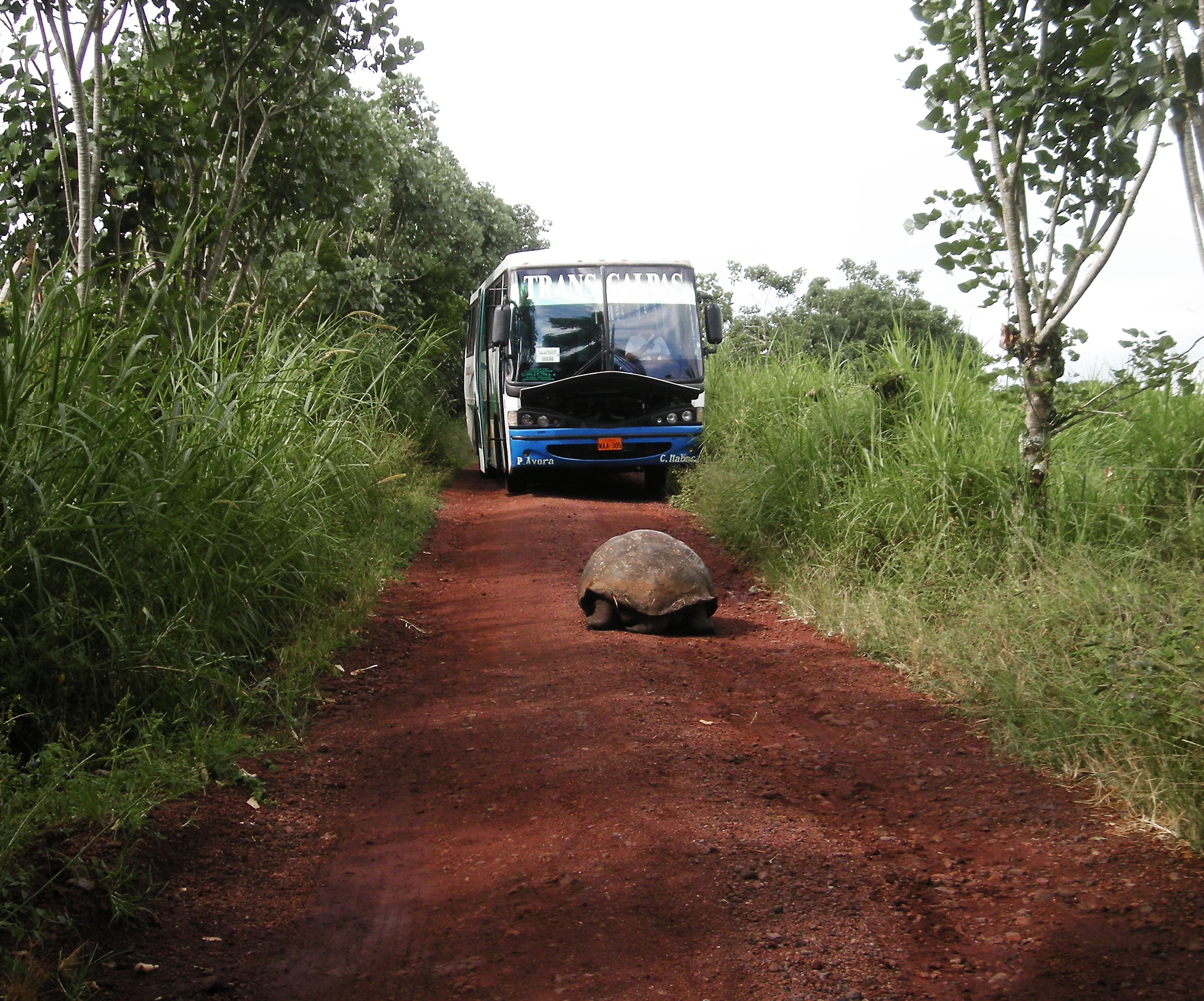
Start in the highlands, where the air turns cool and damp and the ground smells of wet earth. Giant tortoises graze in open pastures here. The first time one exhales, a long, heavy hiss, your kids will jump and then giggle for ten minutes.
By late morning, head down to the Charles Darwin Research Station. This is where children learn why those tortoises nearly vanished and how scientists are bringing them back. It turns a cute animal into a story they will retell at school.
Save the afternoon for Tortuga Bay. The walk out is about a mile and a half on a paved path through cactus forest, with lava lizards darting across your sneakers. Then the trees open onto a long curve of white sand. Marine iguanas are piled like black driftwood on the rocks and scarlet crabs skitter over the lava.
The first beach has strong waves and is reserved for wildlife. Keep walking to the calm cove at the far end, where the water turns flat and turquoise. Kids can float there while whitetip reef sharks glide through the shallows nearby. They are harmless and quietly thrilling.
When you want a quieter strip of sand, Garrapatero Beach offers kayaking and fewer footprints.
Who Santa Cruz Suits Best
Puerto Ayora is the largest town in the islands. There is a harbor walk, shops, and more dinner choices than anywhere else. Most visitors fly into Baltra, a quick hop across a narrow channel. For first-timers and families with young children, this is the best Galapagos island for families who want wildlife by day and easy comforts by night.
How to swim with the turtles in the Galapagos during your family vacation.
San Cristobal: Sea Lions on the Sidewalk
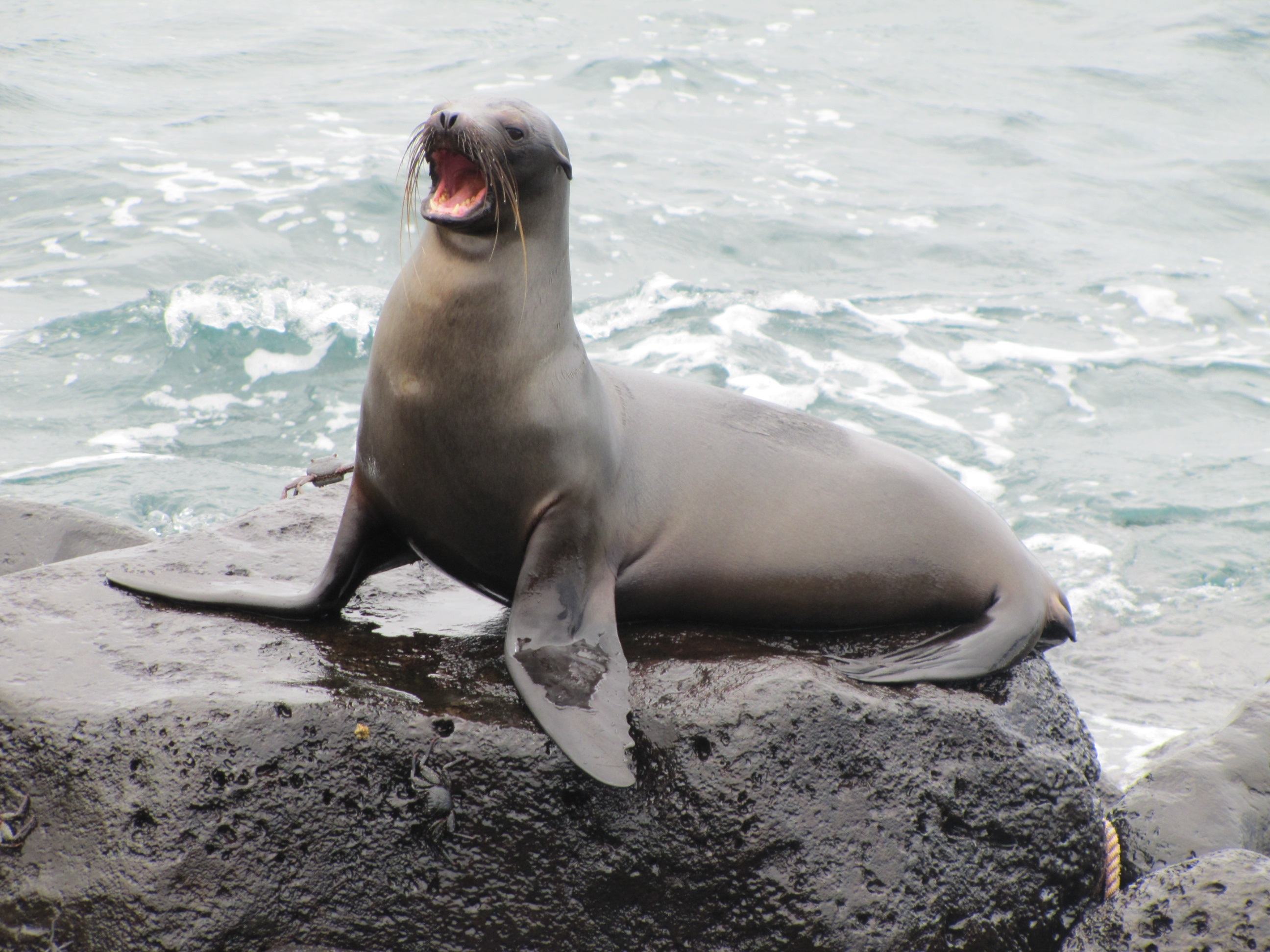
Your six-year-old stops mid-step on the waterfront promenade. A sea lion is sprawled across a public bench, belly up, flippers dangling, and snoring without shame. No fence, no ticket, and no crowd. That moment happens here daily.
Puerto Baquerizo Moreno is the capital of the Galapagos province. Its airport has direct flights to the mainland. Many families fly into one island and home from another, which saves a long backtrack.
This island carries history, too. Charles Darwin first stepped ashore in the Galapagos here in 1835. The Interpretation Center on the edge of town tells the islands’ natural and human story through exhibits kids can wander at their own pace. Trails behind it climb to Frigate Bird Hill, where males puff out red throat pouches like balloons.
For wildlife up close, families snorkel with sea lions at La Loberia. La Galapaguera, about an hour by road, is a tortoise reserve where the animals roam dry forest trails. Cerro Brujo, Puerto Chino, and Ochoa Beach round out the shoreline with soft sand and turquoise water.
Isabela Island With Kids: Penguins and Barefoot Mornings
Isabela’s Water Days
Puerto Villamil feels like a beach town that forgot to hurry. The streets are sand, the flip-flops never come off, and the loudest sound at night is the surf.
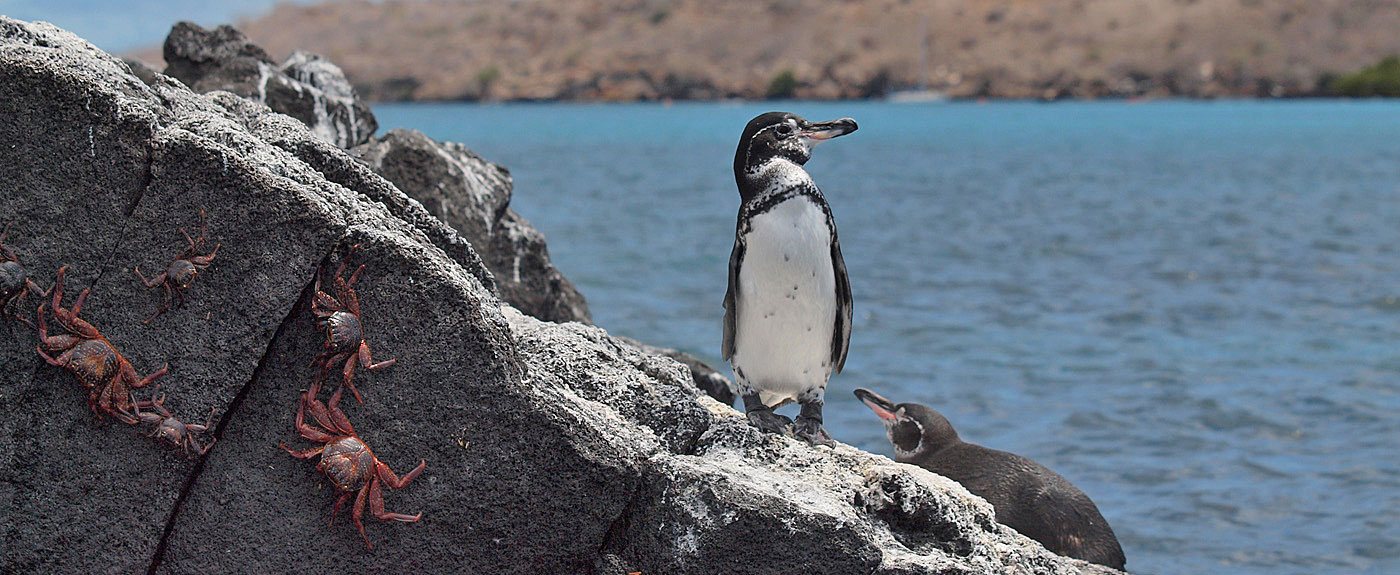
Concha de Perla is a sheltered lagoon a short walk from the dock. Kids slip in from a wooden platform and snorkel among sea lions and bright fish. You will often spot a Galapagos penguin nearby. For many families, this is where a nervous swimmer becomes a confident one.
A short boat ride away, Las Tintoreras is a maze of black lava islets. Whitetip reef sharks rest in a clear, narrow channel. Children can watch them from the trail above, where they are wide-eyed and perfectly safe.
Isabela on Land
Older kids can hike the rim of Sierra Negra. This is home to the largest caldera in the Galapagos and one of the largest on Earth. Fog often pours over the crater edge, then lifts to reveal a vast plain of black lava.
Closer to town, pink flamingos wade through the wetlands. A bike ride along the beach leads to the Wall of Tears, built stone by stone by prisoners of a penal colony in the 1940s and 1950s. Tweens tend to go quiet there. The conversation on the ride back is often the best of the trip.
The trade-off is simplicity. Isabela has fewer restaurants and services, and reaching it takes a boat ride. For families who crave raw nature and slow mornings, that is the point.
The Best Galapagos Island for Families With Grandparents
Here is a detail many planners skip. Medical facilities are available on Santa Cruz and San Cristobal, not on the smaller islands. For a multigenerational Galapagos trip, that makes one of those two your anchor.
Imagine this afternoon. The kids and their parents head out to snorkel. Grandpa settles onto a shaded bench above the harbor with a cold drink to watch pelicans dive. At dinner, everyone trades stories, and he has seen things they missed.
A land base lets each generation choose its own pace. Grandparents should know that visits to outer islands mean stepping into small boats, with crew there to help, and walking trails that can be uneven.
If walking a mile or two on rocky ground is hard, share that early, and I will shape the itinerary around it. Travel insurance that covers medical evacuation belongs on every older traveler’s checklist.
Galapagos With Kids: Matching Islands to Ages
Is the Galapagos safe for children? Remarkably safe. There are no dangerous land predators, crime is low, and the animals evolved without fear of people. The best Galapagos island for families narrows quickly once you discover which one matches the needs of your children.
Toddlers and Little Ones Under Six
For the Galapagos with toddlers, stay on land. Most small yachts set a minimum age of six or seven. Plus, a hotel base protects nap time better than any ship schedule.
Little ones experience these islands at eye level. A marine iguana sneezing salt on the sand, a sea lion pup nosing at the tide line, and a tortoise chewing in slow motion. They will not remember the island names, but they will remember the feeling of being that close to something wild.
Keep boat days short and plan one outing per day. The rest belongs to sandcastles and long lunches.
School-Age Kids and Tweens
This is the sweet spot, and the best Galapagos islands for kids this age are Santa Cruz and Isabela. Children seven and older can usually manage snorkeling, kayaking, and moderate hikes. Small ships welcome them as well, which adds to potential experiences.
Picture your nine-year-old surfacing from her first real snorkel, mask fogged, words tumbling out faster than she can breathe. A sea turtle swam right under her. She will tell that story for years.
Bartolome makes a strong day trip at this age. A wooden staircase of 372 steps climbs to the most photographed view in the islands with twin crescent beaches curving below. Around the base of Pinnacle Rock, Galapagos penguins hop along the lava and slip into the water beside snorkelers.
The best things to do in the Galapagos with kids during your family vacation.
Teens Ready for More
Teenagers are old enough for full independence in the water and curious enough to care about the science. Give them a challenge.
Espanola, among the oldest islands in the archipelago, suits kids eight and up because the trail at Punta Suarez runs over rocky, uneven ground. The reward is a seabird spectacle in the morning and Gardner Bay in the afternoon. This white beach is scattered with dozing sea lions.
Off San Cristobal, confident teen swimmers can snorkel beside Kicker Rock, a split volcanic tower rising straight from the sea. Watch a phone-glued sixteen-year-old float over that deep blue channel, and you will see the screen forgotten for the rest of the day.
Galapagos Land Based vs Cruise With Kids
The island question and the boat question are two halves of one decision. Choosing the best Galapagos island for families only matters if you plan to sleep on land, and many families should.
When a Land-Based Stay Wins
It is the third morning, and your youngest woke up cranky and sunburned. On land, you shrug, cancel the boat tour, and spend the day at the pool with a stack of comic books. Nobody loses anything.
That flexibility is the heart of a land-based trip. You set the pace, keep familiar mealtimes, and sleep in a real bed every night. A pharmacy and a choice of restaurants sit within walking distance. For families prone to seasickness, it is often the only comfortable option.
When a Small Ship Makes Sense
Now picture a different morning. Your family wakes at anchor off an island no day boat can reach, coffee in hand as frigatebirds circle the mast. You sailed there while you slept.
Galapagos ships are small, often carrying around sixteen guests, and nothing like the giant cruise vessels you may be imagining. Your naturalist guide becomes the family’s personal wildlife expert. Meals, landings, and snorkel stops are all arranged for you. Once your youngest meets the ship’s age minimum, this is the best way to see the archipelago.
One note for families with health concerns: Smaller yachts typically sail without a doctor on board, though crews stay in contact with medical teams ashore.
How to choose between a Galapagos cruise and island hopping for your family vacation.
Galapagos Island Hopping with Family: Day Trips Worth the Boat Ride
Even the best Galapagos island for families gets richer with a boat day or two. These are the uninhabited and lightly settled islands that turn a good trip into the one your kids describe at every holiday dinner.
Floreana: Barrel Mail and a Tortoise Homecoming
At Post Office Bay, a weathered wooden barrel has served as a mailbox since whalers started the tradition centuries ago. Your family drops in a postcard, then digs through the stack for one addressed near your own home. The rule is simple: You deliver it by hand. Months later, a stranger may knock on your door with your children’s handwriting.
Offshore, Devil’s Crown is the jagged rim of a sunken volcanic crater. It draws sea turtles, rays, and schools of fish. The currents can run strong, which makes it best for confident swimmers.
Floreana also holds a story unfolding right now. In February 2026, 158 young giant tortoises were released here. They are the first tortoises to walk this island in more than 180 years. It is the opening chapter of a project to bring back a dozen species that vanished from Floreana, supported by a community of about 160 residents. Few places on Earth let children watch a comeback happen in real time.
Santa Fe and Santiago
Santa Fe is small and dry, with forests of towering prickly pear cactus. At Barrington Bay, sea lions lounge along the sand. The island’s own species of land iguana, found nowhere else, basks among the rocks.
On Santiago, the black lava coast at Puerto Egas hides grottos where Galapagos fur seals doze in the shade. Tide pools shimmer with crabs and tiny fish, and James Bay offers calm snorkeling afterward.
How Ferry Routes Shape Your Island Pairing
Public ferries between Santa Cruz, San Cristobal, and Isabela run twice a day. Each crossing takes roughly two hours. The ride can be bumpy, and more than one seven-year-old has stepped off looking pale green.
Every route passes through Santa Cruz, with no direct boat between Isabela and San Cristobal. That makes Santa Cruz plus Isabela the easiest pairing for a four to six day trip. Families with a week or more can add San Cristobal. Small inter-island flights exist for anyone who would rather skip the water. Oh, and motion sickness medicine taken before boarding helps everyone else.
Best Time to Visit Galapagos With Kids

The islands welcome families year-round, and the school calendar lines up well. June through August and December through January match the breaks most families have.
The two seasons feel like two different places. From December to May, the water warms, the seas usually calm, and the lowlands turn green after brief afternoon showers. Air temperatures sit around 75 to 85 degrees, and first-time snorkelers love the gentle, clear water.
From June to November, a cool current sweeps in. Mornings arrive soft and misty, the air settles near 70 to 75 degrees, and the sea turns rich with food. That richness draws humpback whales. A child who spots her first spout from the deck of a boat will talk about it all the way home.
December is the busiest stretch of the year. Book early if the holidays are your window.
What Families Need Before They Fly
Picture the airport in Quito at dawn. Your kids wear their backpacks, your passports sit in one zippered pouch, and an envelope of clean bills rests in your bag. That calm comes from a checklist handled weeks earlier.
Every child needs a passport of their own, valid for at least six months beyond your arrival in Ecuador. A birth certificate will not take its place.
Before your flight to the islands, each traveler needs a Transit Control Card, registered online or at the Quito or Guayaquil airport before check-in. You will also complete an online biosafety declaration shortly before departure. Every bag gets scanned and sealed to keep seeds and pests off the islands. Allow at least two and a half hours at the airport for these steps.
When you land at Baltra or San Cristobal, park rangers collect the national park entrance fee in cash, with a reduced rate for children under twelve. There are no ATMs at Baltra, and worn or torn bills are often refused. Bring crisp ones from the mainland.
If only one parent is traveling, carry a notarized letter of consent from the other. Ecuador does not usually ask visiting children for one, but airlines and border officers at home can.
When you work with me, I handle this list and walk you through each step. You simply show up with the pouch.
Ready to Plan Your Galapagos Family Vacation?
Imagine the last evening of your trip. The sky over the harbor turns peach and violet, the kids are sandy and sun-kissed, and someone is already asking when you can come back. You did not spend a single night worrying about ferries, paperwork, or which island came next.
That is what I build for the families I work with. You bring your people and their ages, their energy, and their wishes. I bring the knowledge of which beach, which boat, and which morning will fit them best. Together, we find the best Galapagos island for families like yours, then shape every day around it.
So, if you said yes, I would like to invite you to schedule a planning session with me by clicking here. Clicking this link will take you directly to my digital calendar to schedule a time that is convenient for you.
And if you are not ready to plan a wonderful family vacation in the Galapagos Islands or anywhere else, you can easily sign up for my newsletter here. This will ensure we stay connected and you receive all the travel information I share.

Tracy is the owner of Elite Travel Journeys, a luxury travel agency dedicated to crafting extraordinary, memory-making journeys for families, multigenerational groups, empty nesters, and solo female travelers. A proud military veteran and President of the Central PA Chapter of ASTA, Tracy brings both discipline and deep passion to everything she does. With a particular love for river cruising, especially Europe’s enchanting Christmas Markets, she has been turning travel dreams into life-changing experiences since 2014. Tracy believes that extraordinary travel doesn’t just take you somewhere new; it changes who you are.
Enter your Name and best Email Address to receive
On Your Next Family Vacation
We respect your privacy and will never share or sell your information.
3 Ways to See It All in Alaska


On Your Next Family Vacation
Click here for 10 Exciting Family Adventures
You Can Plan
NOW