
Your Antarctica Cruise Awaits: How to Plan the Most Extraordinary Trip of Your Life
Imagine stepping off a small inflatable boat onto the Antarctic Peninsula during an Antarctica cruise. The ice crunching beneath your boots. The air so clean and so cold it feels like something your lungs have never experienced before. There is no sound except the distant call of seabirds and the soft lapping of water against ancient ice. A Gentoo penguin waddles toward you with complete confidence, stops two feet away, and looks up at you as if you are the most unremarkable thing it has ever seen. Behind you, an iceberg the size of a cathedral drifts silently past in a shade of blue that has no name in any language you know. Your phone has no signal. Your inbox does not exist. There is nowhere on Earth you are supposed to be, except exactly here.
That is what an Antarctica cruise feels like. And I promise you, no photograph, no documentary, and no description I can write will fully prepare you for the moment it becomes real. I am Tracy, founder of Elite Travel Journeys. I have spent over a decade helping women who have earned the very best that this world has to offer plan the kinds of trips that become the defining chapters of their lives. Antarctica is the destination that moves me most deeply. And it is the one my clients talk about long after every other trip has faded into a pleasant memory.
This guide will walk you through everything you need to know to plan the most remarkable Antarctica cruise of your life. When to go. How to get there. What to pack. What to expect when you step off that Zodiac for the very first time. Are you ready to see what is waiting for you??
Your Antarctica Cruise Awaits: How to Plan the Most Extraordinary Trip of Your Life
Why an Antarctica Cruise Belongs at the Top of Your Bucket List
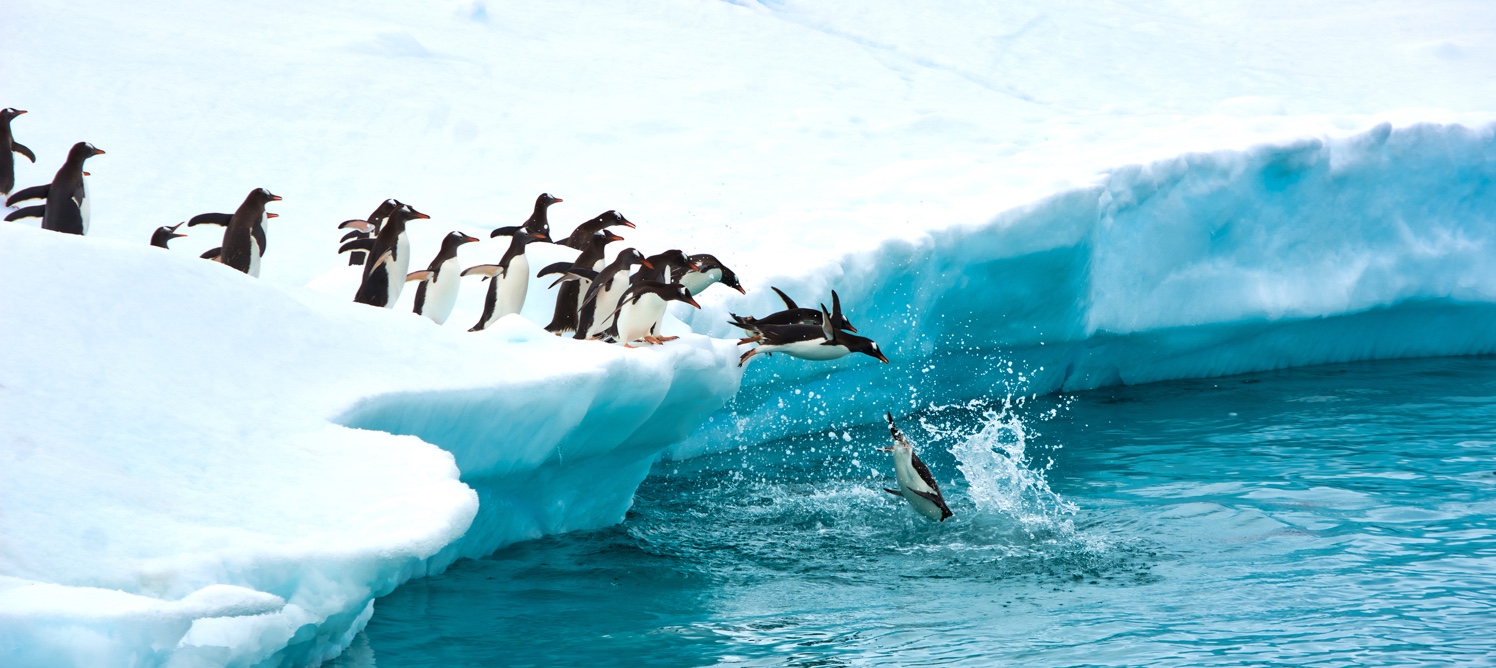
There are beautiful places all over this world. I have had the privilege of visiting many of them. I’ve helped numerous travelers experience them. But White Continent travel is different in a way that is genuinely difficult to put into words. And believe me, as someone who writes and speaks about travel for a living, that is saying something.
Antarctica is the last true wilderness on Earth. It belongs to no country, no government, and no single culture. It is protected by the Antarctic Treaty. Visited by fewer than 110,000 people per year. And governed by strict environmental regulations that ensure the continent remains pristine for generations to come. To put that number in perspective, more people attend a single college football game in the United States than visit Antarctica in a year.
The landscapes are so vast and silent that your brain genuinely struggles to process them. Icebergs the size of cathedrals drift past the ship in shades of blue you have never seen before. Glaciers calve into the sea with a sound like thunder. The sky never fully darkens at the height of summer. And you find yourself standing on deck at midnight, watching the light do things to the ice that no photograph can fully capture.
But what my clients tell me most often is that the real gift of Antarctica travel is not the scenery. It is what happens to you when there is no distraction, no noise, and no escape from the present moment.
Women I have sent to Antarctica have come home with clarity they had been searching for, for years. Couples have told me it saved their marriage. That is not hyperbole. That is what happens when you put the right people in the most extraordinary place on Earth.
When to Visit Antarctica: The Best Time to Go and Why It Matters
One of the most common questions I receive about Antarctica travel is simple: When should I go? The answer depends entirely on what you want to experience. Plus, each window of the season offers something completely different and equally extraordinary.
The Antarctica cruise travel season runs from late October through late March. This is the Southern Hemisphere’s summer. Outside of those months, the continent is locked in darkness and ice, and no expedition ships operate. Within that five-month window, though, the timing of your trip will shape the entire character of your experience.
Early Season: October to November. Ice, Drama, and Solitude
The early season is for those who want Antarctica at its most dramatic and least crowded. The sea ice is still thick, the icebergs are at their most spectacular, and the landscape has a raw, untouched quality that is breathtaking. Wildlife is active but not yet at peak numbers. Penguins are just beginning to court and nest, and the energy in the colonies feels electric.
If you are someone who values solitude and dramatic scenery above all else, and if you do not mind colder temperatures and a slightly more unpredictable weather window, early season is a magnificent time to go. Departure dates in October and November tend to have more availability. Although, I will tell you right now that even that window fills faster than most people expect.
Peak Season: December to January. Penguin Chicks, Midnight Sun, and Maximum Wildlife
December and January are the heart of the Antarctica cruise season. And they are my most requested dates by far. This is when the penguin chicks hatch and take their first clumsy steps across the ice. When humpback and minke whales arrive in enormous numbers to feed in the nutrient-rich waters. And when the famous Antarctic midnight sun keeps the sky glowing in shades of gold and rose even at two in the morning.
Peak season is when visiting Antarctica feels most alive. The wildlife is abundant. The weather is at its most cooperative. And the long days mean more time for Zodiac landings and shore excursions.
It is also the most competitive time to book. If your heart is set on December or January departures, you need to be having a conversation with me well in advance. I will explain exactly how far in advance in just a moment.
Late Season: February to March. Whales, Soft Light, and the Last Ships of the Year
February and March bring a different kind of magic to the White Continent. The penguin chicks are growing fast and learning to swim. The whale activity is at its peak. And the light turns soft and golden in a way that photographers absolutely love. The sea ice has receded, which means ships can reach areas that are inaccessible earlier in the season.
Late season can also offer slightly more flexibility on availability, which makes it worth exploring if your schedule is constrained. The temperatures are still cold by most standards, but milder than early season, and the overall experience is every bit as extraordinary. Some of my clients who have traveled in February have told me it was the perfect time, primarily because the whale sightings were unlike anything they had ever imagined.
How to Get to Antarctica: Your Options for Reaching the White Continent
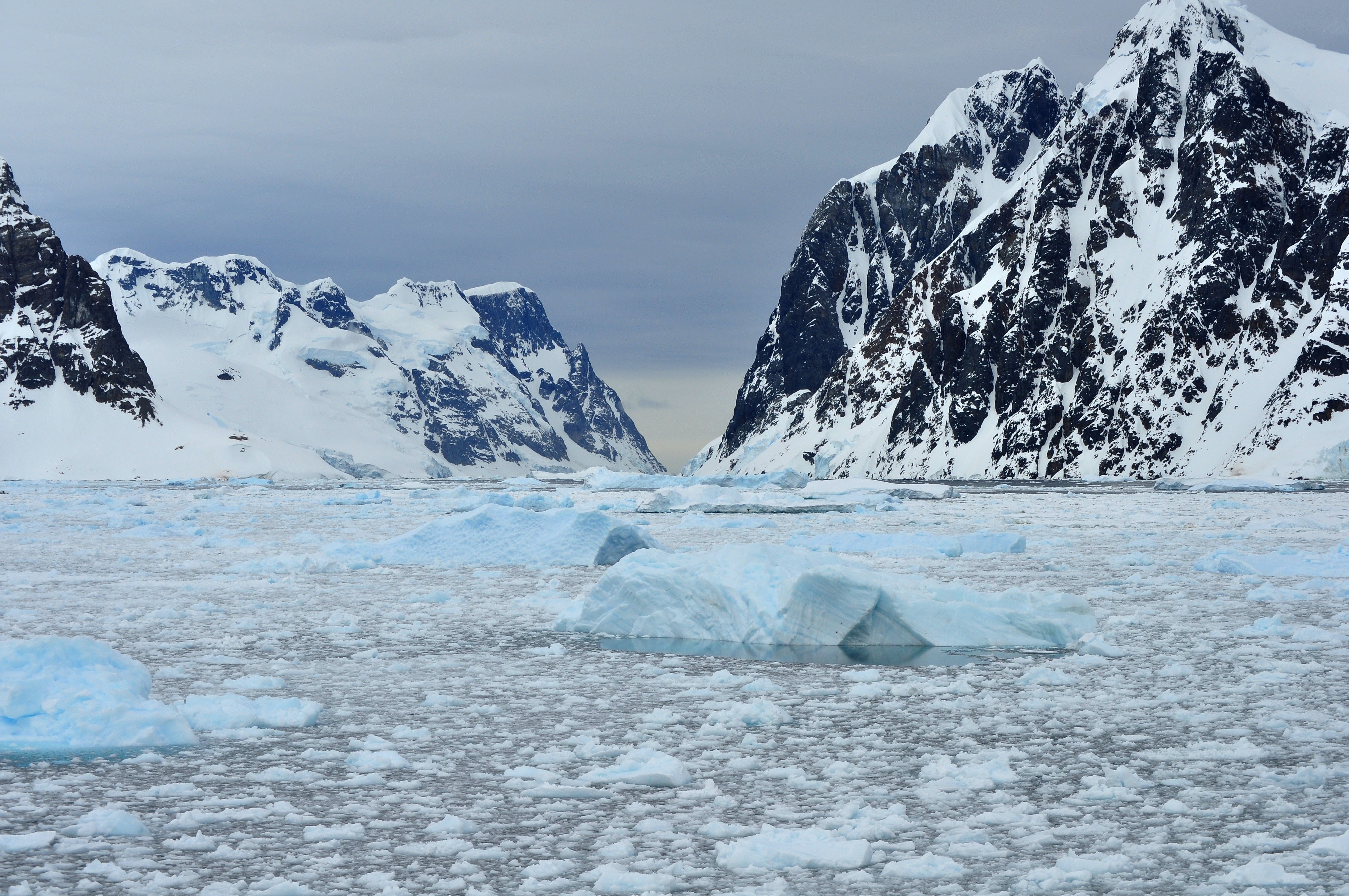
Getting to Antarctica is part of the adventure. Understanding your options is one of the most important parts of planning this trip. There are two primary ways to reach the continent. Each one offers a meaningfully different experience.
The Classic Drake Passage Cruise: The Journey That Earns Its Ending
The most traditional way to reach Antarctica is by boarding an expedition ship in Ushuaia, Argentina and sailing across the Drake Passage. The Drake is a roughly 500-mile stretch of open ocean connecting the southern tip of South America to the Antarctic Peninsula. It is one of the most storied stretches of water on the planet.
A Drake Passage cruise typically takes two days of sailing each way. The experience varies considerably depending on weather conditions. Expedition veterans often refer to the two possible versions of the crossing as the Drake Shake and the Drake Lake.
The Drake Shake is exactly what it sounds like. Swells that can reach twenty to thirty feet. A crossing that tests your sea legs and rewards you with the absolute certainty that you have earned your arrival.
The Drake Lake, by contrast, is a calm, glassy crossing that feels almost meditative, with wandering albatross gliding alongside the ship and the first icebergs appearing on the horizon like a promise.
I will be honest with you… Even on a shaky Drake, my clients have returned saying it was part of the magic. There is something about crossing those waters the way the great explorers did, knowing that every mile is taking you further from the world you left behind, that changes the way Antarctica feels when you finally arrive. That said, the Drake is not for everyone, and that is exactly why the fly cruise option exists.
The Antarctica Fly Cruise: Skip the Drake and Maximize Your Time on the Ice
The Antarctica fly cruise is a newer option that has become enormously popular. Particularly among my clients who want to maximize every single moment they spend on the continent itself. Instead of sailing both ways across the Drake Passage, you fly from Punta Arenas, Chile directly to a landing strip on the Antarctic Peninsula, board the expedition ship there, and begin exploring immediately.
The flight takes roughly two hours and eliminates up to four full days of sea crossing. For women who have limited vacation time, or who simply prefer not to spend days at sea before they ever set foot on the ice, the fly cruise is an extraordinary option.
Some itineraries also offer a hybrid model, where you fly one way and sail the other, which gives you the best of both experiences.
The fly cruise options do come with their own considerations. Flights to Antarctica are weather-dependent and can be delayed. This is why I always build buffer days into these itineraries. And I encourage my clients to treat those days as an opportunity to explore the stunning city of Punta Arenas rather than a frustration.
The best Antarctica travel experiences are planned with flexibility. And part of my job is making sure your schedule accommodates the unpredictability of one of the world’s most remote destinations.
Planning Your Antarctica Expedition Cruise: What You Need to Know Before You Book
This is the section I wish every person dreaming of Antarctica would read before they start browsing the internet on their own. Because the truth is, planning an Antarctica expedition cruise is not like planning most trips. The variables are significant. The logistics are complex. And the decisions you make up front will determine the entire quality of your experience. This is exactly the kind of trip where working with a travel advisor is not just helpful. It is essential.
Small Ship vs. Large Ship: Why This Decision Matters More Than You Think
One of the first and most important decisions in planning your Antarctica expedition is choosing the right ship. Antarctic regulations limit the number of passengers who can go ashore at any one time to 100 people. That single regulation changes everything about the ship size you should be considering.
Smaller expedition ships, typically carrying between 100 and 200 passengers, can get every single guest ashore during each landing window.
Larger ships, while often more luxurious in terms of onboard amenities, must rotate passengers in groups. This means some guests are always waiting while others are on the ice.
For a trip of this magnitude, time on the continent itself is everything. I consistently recommend smaller, purpose-built expedition ships to my clients because the quality of the on-ice experience is simply incomparable.
How Far in Advance Should I Book an Antarctica Cruise?
This is one of the most searched questions about Antarctica travel, and the answer may surprise you. For peak season departures in December and January, the best cabins on the best ships are gone twelve to eighteen months before departure. For the overall season, I recommend beginning the planning conversation at least nine to twelve months out at minimum.
Antarctica is not a trip you can plan at the last minute and expect to get exactly what you want. The expedition season is short. The best ships have limited capacity. And the travelers who are most serious about this destination know to book early.
Every year I have clients reach out in the spring hoping to get on a ship the following December, only to find that the sailings they want are already full or down to their least desirable cabins. Do not let that be you.
When you work with me, I track availability, know which ships and operators deliver the most consistent experience, and I can tell you honestly which dates and cabins are worth the investment. That guidance alone can save you from one of the most expensive and disappointing mistakes a traveler can make.
What to Expect on an Antarctica Expedition Cruise
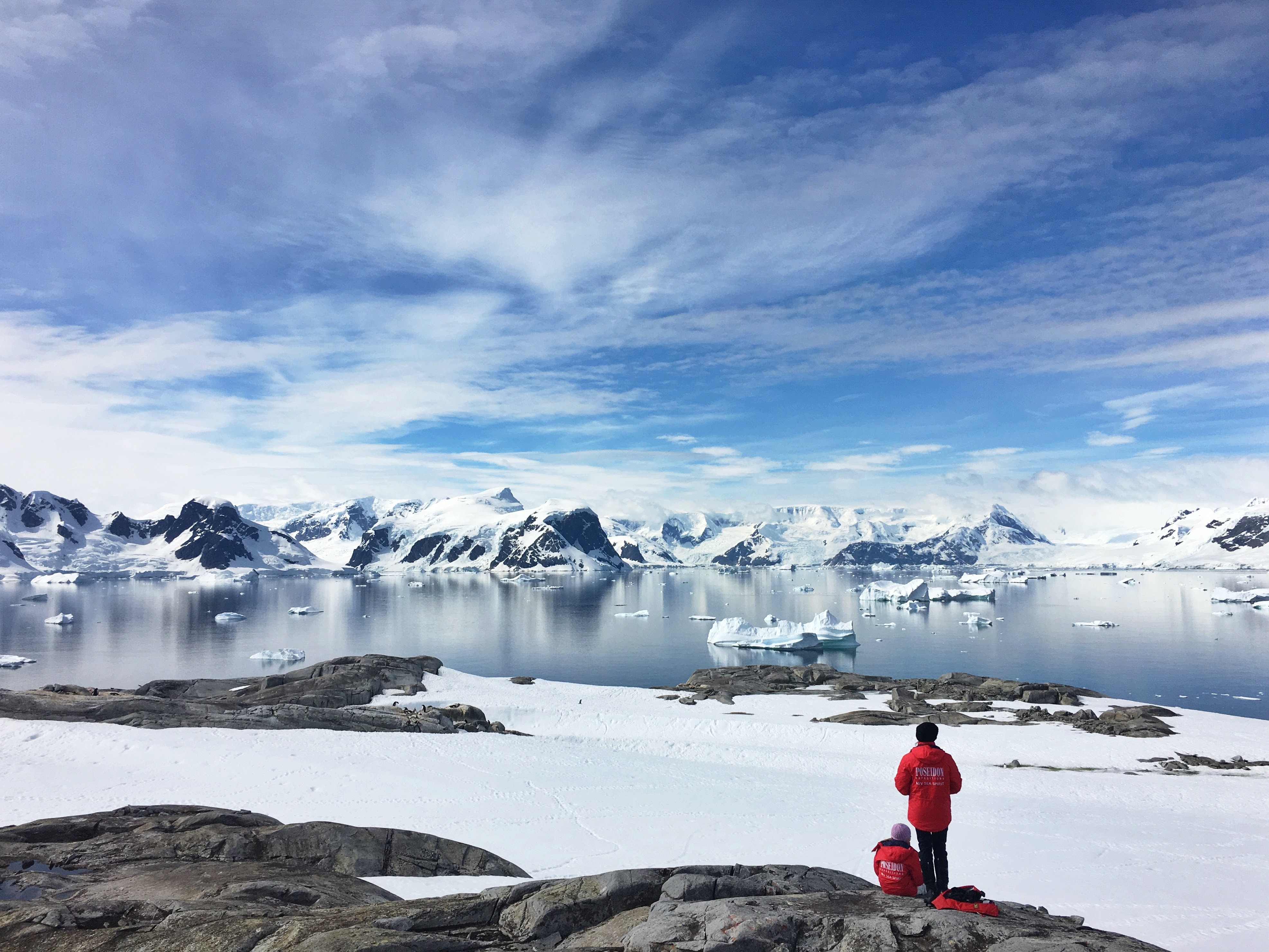
One of the most common requests I get from clients who are considering this trip is: Tell me what a day actually looks like. Because Antarctica sounds extraordinary in theory, but it can be hard to picture the reality of it when you have never been anywhere quite like it before. Let me walk you through it.
Every morning on an Antarctica expedition cruise begins with an announcement from the expedition team. They have been up before dawn scouting conditions, watching wildlife activity, and determining the best sites for that day’s landings.
You will have already had breakfast by the time the Zodiacs, which are the small inflatable boats that ferry you from the ship to shore, are being prepared. The briefings are thorough, led by expert naturalists, historians, and scientists who bring genuine passion to every single conversation.
Going ashore for the first time is a moment none of my clients have ever been able to fully prepare for. You climb into the Zodiac, the ship disappears behind you, and then you are there. On the Antarctic Peninsula. With penguins walking toward you with absolute fearlessness, because in Antarctica, humans are not predators. Wildlife has no reason to fear you. They will simply go about their business while you stand among them, genuinely speechless.
Afternoons might bring a second landing at a different site, a Zodiac cruise through iceberg-filled waters, or a presentation by one of the ship’s experts in the lecture lounge.
Evenings are for dinner, conversation with fellow travelers who share your curiosity and sense of adventure, and, if the conditions are right, another hour on deck watching the light on the ice. On a good night, that light never fades at all.
Check out these first-time cruise tips.
What Wildlife Will I See During an Antarctica Cruise?
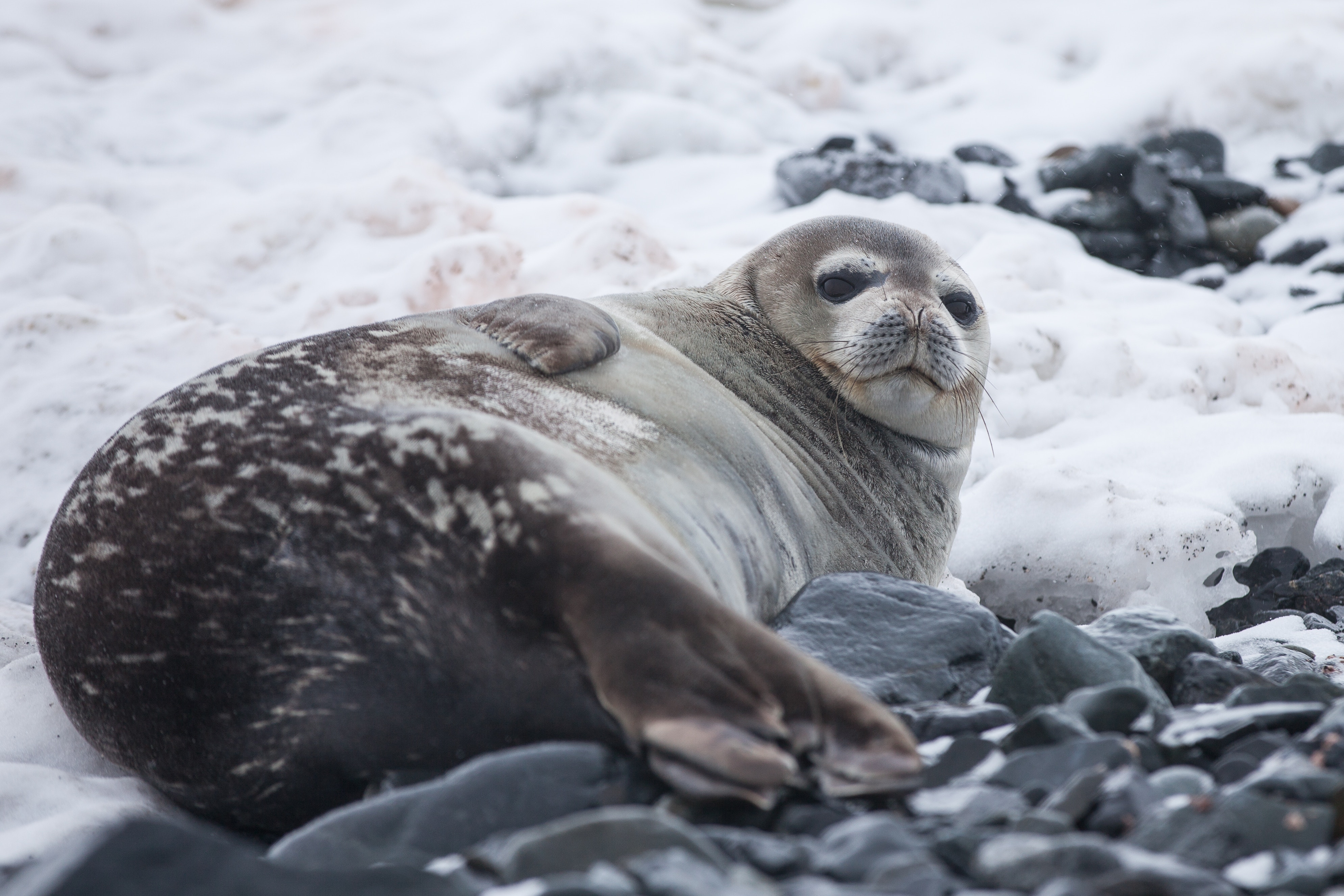
The wildlife is one of the most profound gifts of visiting Antarctica. And it is more abundant and more accessible than most people imagine before they go. Penguins are the stars of the show. Antarctica is home to several species including Gentoos, Chinstraps, and Adelies.
Depending on your season and itinerary, you may also encounter the spectacular Emperor penguin. It is the largest penguin species on Earth and the subject of more wildlife documentaries than almost any other animal.
The whale watching in Antarctica is unlike anything available anywhere else in the world. Humpback whales are a near-daily presence in the peak season, often approaching the Zodiacs with breathtaking curiosity. Minke whales, orcas, and fin whales are also regularly spotted.
On the ice, you will find Weddell, crabeater, and leopard seals lounging in completely unperturbed magnificence. Above you, a rotating cast of seabirds including the wandering albatross, with its nearly twelve-foot wingspan, will follow the ship for days.
Every Antarctica expedition cruise I have helped plan has delivered wildlife encounters that my clients describe as the most extraordinary of their lives. The difference between a good wildlife experience and a transcendent one often comes down to the expertise of the naturalist team on board. This is another reason why choosing the right ship matters so much.
What Do I Wear and Pack for an Antarctica Cruise?
Packing for Antarctica is a topic that deserves its own conversation, and it is one I have in detail with every client I send there. The essential principle is layering. You need a moisture-wicking base layer, an insulating mid layer, and a waterproof and windproof outer shell. Most expedition ships provide high-quality expedition parkas and rubber boots for shore landings. This saves you from having to invest in specialized gear you may never use again.
Beyond the layers, the non-negotiables are quality waterproof gloves, a warm hat that covers your ears, thermal socks, UV-protective sunglasses (the Antarctic sun reflecting off the ice is intense), and a camera with extra batteries. Cold temperatures drain batteries faster than you expect.
A Story from the Ice
One of my clients, a woman in her early fifties who had spent thirty years building a business she was incredibly proud of, came to me a few years ago and said she wanted to take a trip that matched the scale of what she had accomplished. She had seen Paris and had done the Caribbean. She wanted something that would make her feel small in the best possible way.
We booked her on a small-ship Antarctica expedition cruise with peak season departure. She called me from somewhere south of the Drake Passage saying she felt calm in a way she had not felt in years. She described stepping off the Zodiac onto the Antarctic Peninsula, the ice crunching under her boots, and a Gentoo penguin waddling directly up to her feet and looking up at her with complete indifference to her entire impressive resume. And she laughed when she told me that part and said, Tracy, nothing has ever put me in my place so perfectly. I came home knowing exactly what matters and exactly who I want to spend my time with. That trip was the best decision I have ever made, that was not a business decision.
That is the kind of trip I plan. That is the kind of moment I live to create.
Who Takes an Antarctica Cruise and Is It Right for You?
This is a question I love answering, because the honest answer is: Antarctica is right for anyone who is ready for it. But over the years, I have noticed that certain types of travelers tend to get the most out of this particular journey.
Empty nester couples who have spent decades building careers, raising children, and quietly putting their own adventures on hold are among the most transformed travelers I send to Antarctica. This trip has a way of giving people back to each other. With no cell service, no obligations, and nowhere to be but present, couples rediscover the version of themselves that fell in love before everything else got so loud.
Solo women travelers who are ready to invest in themselves and experience something genuinely extraordinary are also incredibly well suited to Antarctica. Many expedition ships have a strong community of solo travelers. The conversations at dinner are some of the most stimulating you will ever have. And the experience of standing alone at the end of the Earth with nothing but your own thoughts and the most magnificent landscape in the world is the kind of thing you will carry with you forever.
Multigenerational families who want an experience that genuinely works for a range of ages and interests also find Antarctica to be surprisingly accessible. You do not need to be an athlete to visit Antarctica. You need to be in good general health, able to walk on uneven terrain, and genuinely curious about the world. If that describes your family, Antarctica will give every single generation a shared memory they will talk about for the rest of their lives.
Check out these other once in a lifetime vacations.
Why You Should Book Your Antarctica Cruise Through a Luxury Travel Advisor
I want to be completely transparent with you about something. An Antarctica expedition cruise is the single most logistically complex trip most of my clients will ever take. It involves international flights to South America, pre and post trip extensions in Buenos Aires, Ushuaia, or Punta Arenas, ship selection among dozens of operators with wildly varying levels of quality, cabin category decisions that significantly impact your comfort, and weather-dependent flexibility built in at every turn.
Attempting to navigate all of that on your own, through a search engine and a booking platform, is not impossible. But it is the travel equivalent of representing yourself in a complex legal case. You might get there. You also might miss something critical that costs you experientially.
I have been a luxury travel advisor since 2014. I am organized, direct, and I do not waste my clients’ time. And I know which Antarctica expedition cruise operators deliver consistent excellence, which cabin categories are worth the upgrade, which departure dates offer the best balance of availability and experience, and how to build an itinerary that makes this once in a lifetime journey feel seamless from the moment you leave home to the moment you return.
More than that, I know what it means to invest in a trip of this magnitude and how much is at stake when you are trusting someone with your time, your family, and the memory you are trying to create. I take that responsibility seriously. Every single time.
Close your eyes for just a moment and imagine this
It is midnight. The sun has not fully set and will not. The sky above the Antarctic Peninsula is painted in colors that have no names in any language you know. You are standing on the deck of your expedition ship, wrapped in your parka, holding a glass of something warm. The ocean around you is completely still. An iceberg the size of a ten-story building drifts silently past, glowing blue from within.
There is no meeting tomorrow, no inbox, and no one asking anything of you. There is only this, the most extraordinary place on Earth, the person beside you who you came here to be with, and the quiet understanding that you waited long enough.
Do not wait another year. Your Antarctica cruise is ready for you. The only question is whether you are ready to say yes.
Let’s Start Planning Your Antarctica Expedition Cruise
If you have read this far, you already know. This is your trip. Let me help you plan it the right way, with the expertise, the relationships, and the personal attention that a journey of this magnitude deserves.
Sign up for my newsletter as well, so you’re not missing out on any of the incredible travel information I share.

Tracy is the owner of Elite Travel Journeys, a luxury travel agency dedicated to crafting extraordinary, memory-making journeys for families, multigenerational groups, empty nesters, and solo female travelers. A proud military veteran and President of the Central PA Chapter of ASTA, Tracy brings both discipline and deep passion to everything she does. With a particular love for river cruising, especially Europe’s enchanting Christmas Markets, she has been turning travel dreams into life-changing experiences since 2014. Tracy believes that extraordinary travel doesn’t just take you somewhere new; it changes who you are.
Enter your Name and best Email Address to receive
On Your Next Family Vacation
We respect your privacy and will never share or sell your information.
3 Ways to See It All in Alaska


On Your Next Family Vacation
Click here for 10 Exciting Family Adventures
You Can Plan
NOW